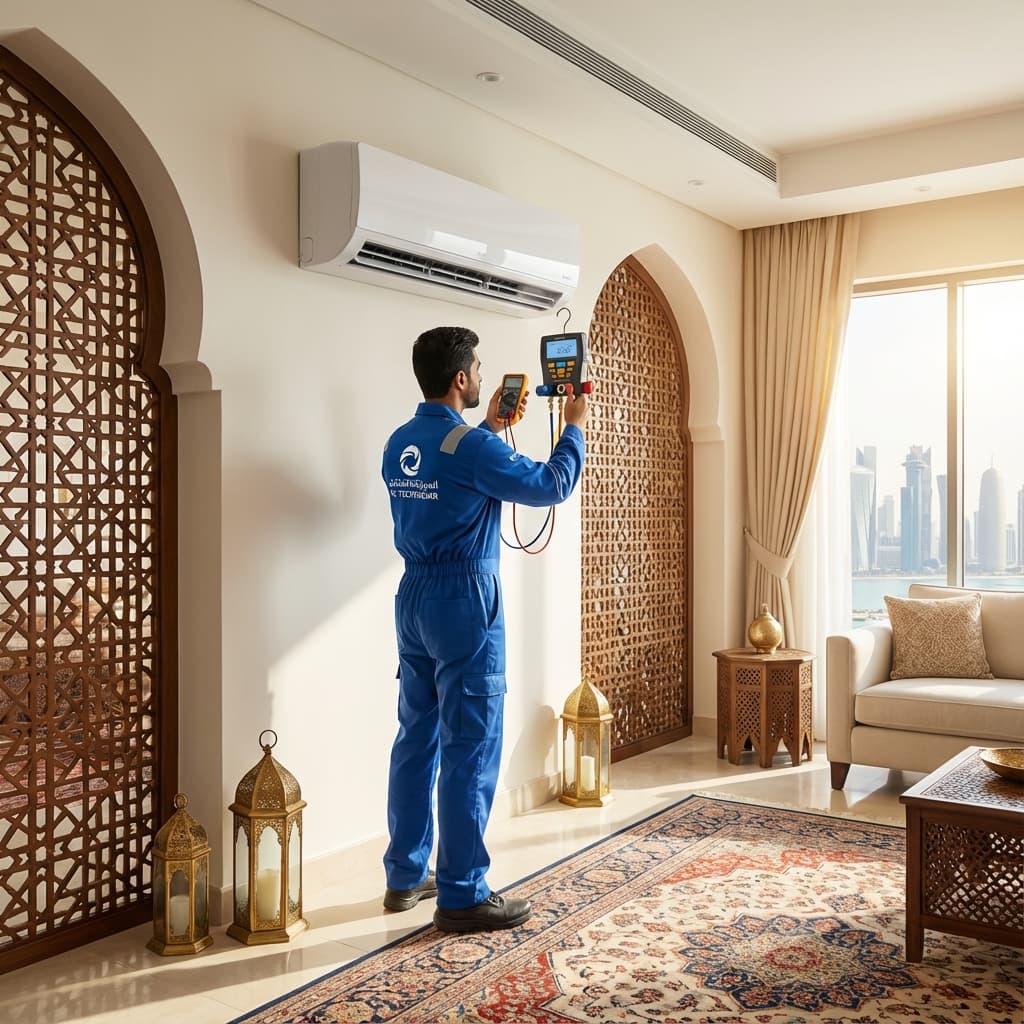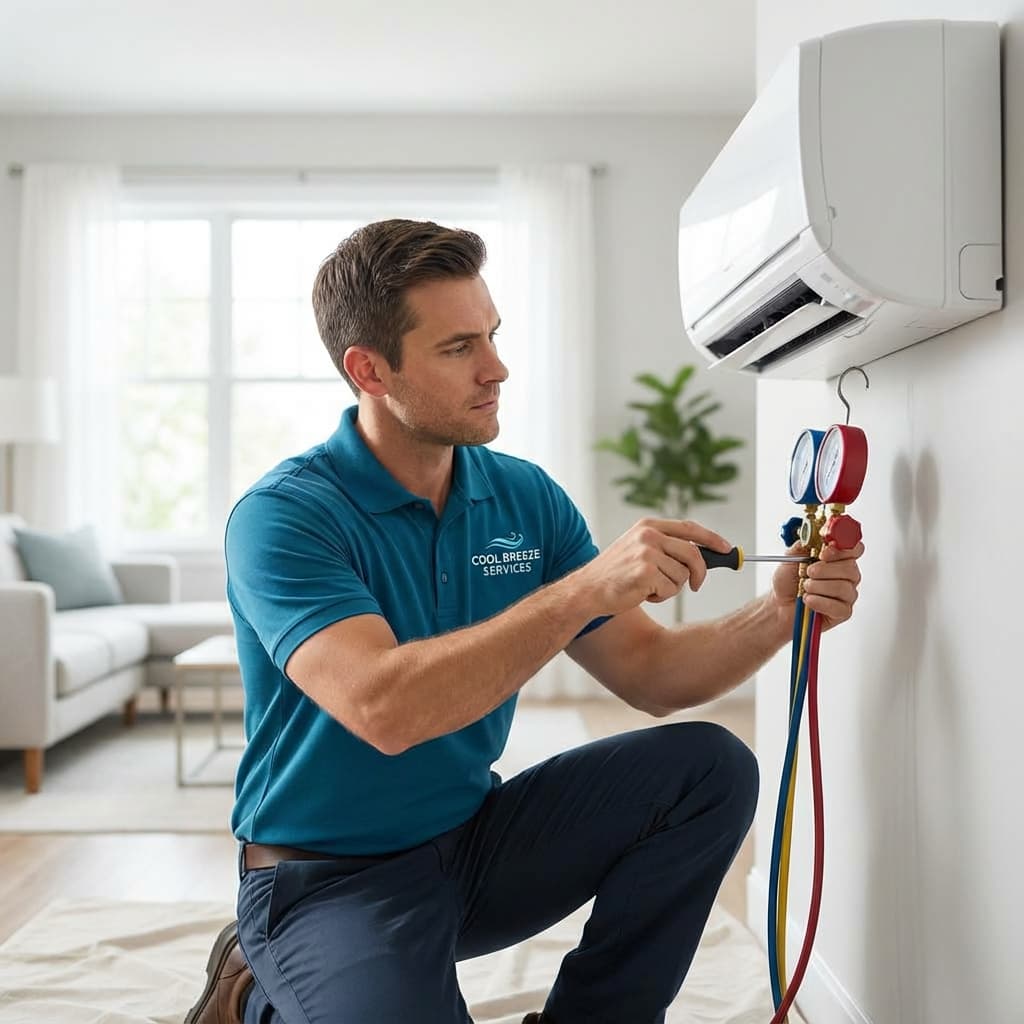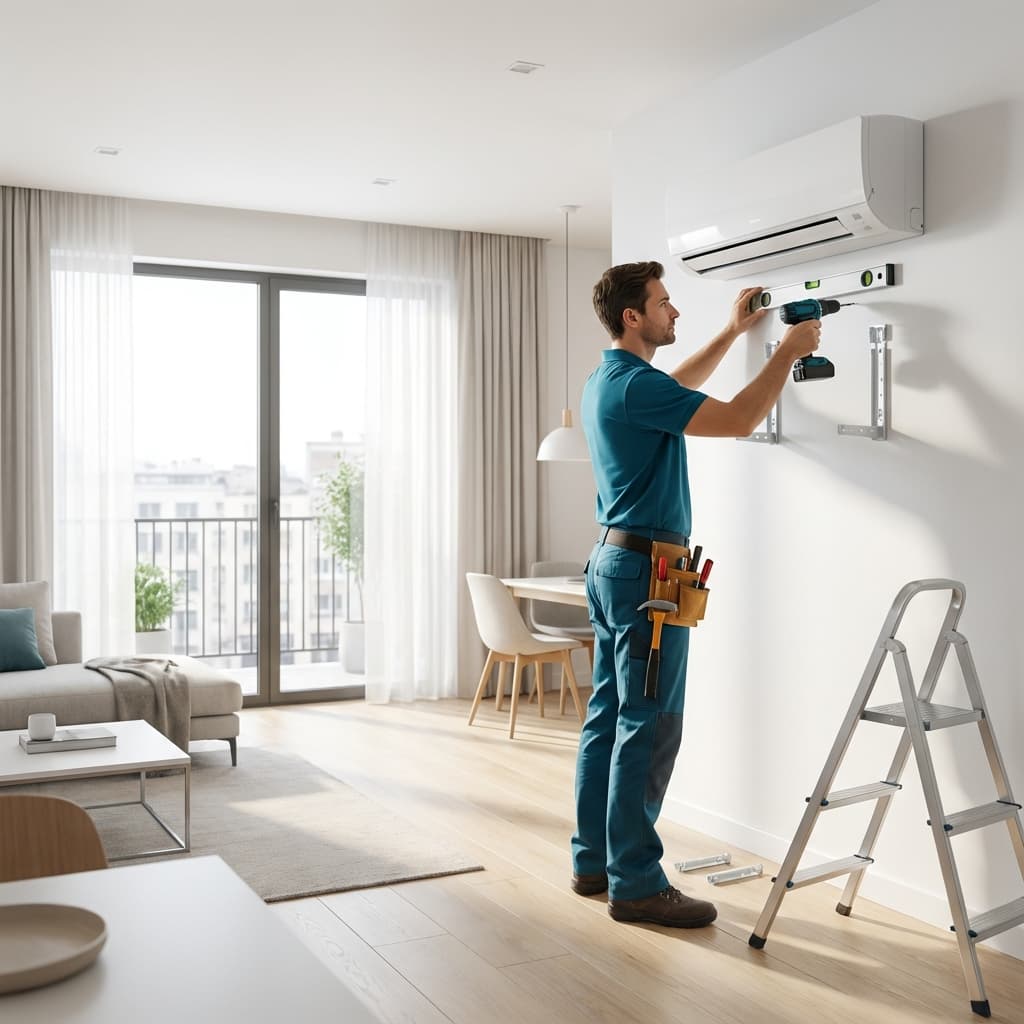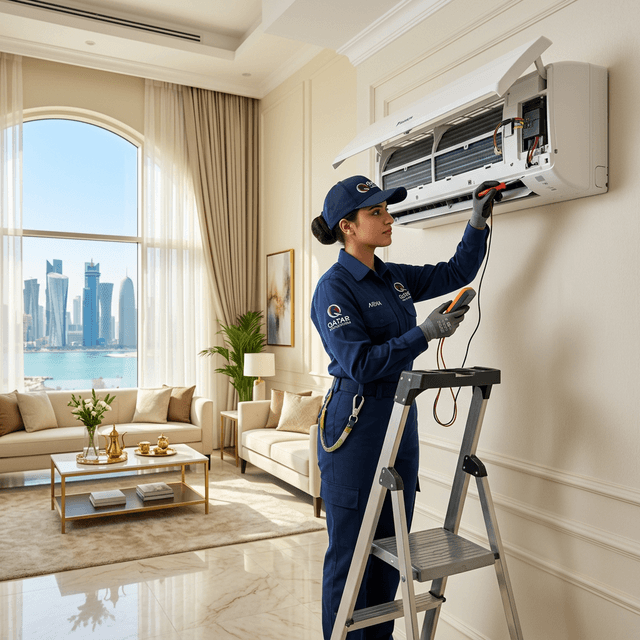
If you live in Qatar, your air conditioner is not a luxury — it is a critical piece of life-support infrastructure. With summer temperatures routinely exceeding 50 °C and even winter days reaching 25–30 °C, your AC works harder than almost anywhere else on Earth. This ultimate guide covers everything you need to know about keeping your AC in peak condition — from simple monthly checks you can do yourself to understanding when you need professional help, navigating Kahramaa tariffs, combating Pearl-Qatar humidity, and verifying local consumer rights.
📊 Quick Stats About AC in Qatar
- • Average AC running time in Qatar: 8–10 months per year (often 24/7)
- • Energy consumed by AC: 60–70% of total household electricity bill
- • Lifespan increase with regular maintenance: 5–8 additional years
- • Cost savings from proper maintenance: 15–30% on electricity annually
Chapter 1: The Harsh Realities of Operating HVAC in Qatar's Climate
Most AC maintenance manuals are written for moderate climates where systems run for a few months a year. Qatar is fundamentally different. Here, your air conditioning system operates under extreme conditions that accelerate wear and tear, lead to rapid component degradation, and strain thermodynamic limits. Understanding these factors is key to preventing system breakdowns when you need cooling the most.
1. The Extreme Temperature Differential
Thermodynamics dictates that heat transfer is driven by temperature differences. In Europe or North America, an AC might be asked to cool a 30 °C room down to 22 °C — a difference of 8 °C. In Qatar, when outdoor temperatures reach 48 °C to 52 °C and you set your thermostat to 22 °C, your system is forced to maintain a massive 26 °C to 30 °C temperature differential. This requires high compression ratios, placing immense thermal and mechanical stress on the compressor motor and dual-run capacitors.
2. Airborne Sand and Micro-Dust (Haboobs)
Qatar's desert geography means the air is constantly laden with fine silica dust. During seasonal sandstorms (shamal winds or haboobs), the air contains high concentrations of suspended particles. These micro-particles act as a physical barrier when they settle on the outdoor condenser fins, forming a thick thermal blanket. This sand blanket insulates the coils, preventing the refrigerant from releasing heat, which causes compressor temperatures to spike and triggers high-pressure safety switch cut-offs.
3. The Double-Whammy of Coastal Humidity
Properties in coastal Doha, West Bay, Lusail Marina, and The Pearl-Qatar experience extreme relative humidity levels, frequently exceeding 85% during August and September. High humidity requires the evaporator coil to perform heavy latent cooling (removing moisture from the air) alongside sensible cooling (lowering the temperature). The condensed water must drain continuously. If the drain line is even slightly obstructed by dust, this high volume of water will overflow, causing water damage to walls, ceilings, and flooring.
4. Marine Salinity and Galvanic Corrosion
The salt-laden air along the Arabian Gulf is highly corrosive. When salt particles deposit on the aluminum fins and copper tubes of the outdoor condenser, moisture triggers galvanic corrosion. This corrosion eats away the thin aluminum fins, reducing the surface area available for heat transfer. Over time, it can cause pinhole refrigerant leaks in the copper joints, leading to total system failure.
Chapter 2: Detailed Step-by-Step DIY Maintenance Protocol
While deep technical servicing should be left to certified professionals, there are several preventive maintenance tasks that Qatar residents can easily perform. Doing these monthly will keep your system running efficiently, lower your energy bills, and prevent emergency breakdowns.
Step 1: The Mesh Filter Sanitization Process
Air filters block dust, sand, and pet hair. In Qatar, mesh filters should be cleaned every two weeks during the summer and monthly during the winter.
- Power Down: Turn off the AC unit using the remote and switch off the isolator switch on the wall for safety.
- Access the Filters: Gently lift the front cover panel of the indoor unit until it clicks and holds open. Slide the mesh filter panels downward and out.
- Dry Dusting: Take the filters outside or to a balcony and gently tap them to remove loose dust and sand particles.
- Chemical Wash: Rinse the filters in a bathtub or sink with lukewarm water. If they are greasy or have odors, wash them with a mild dish soap or a diluted vinegar solution. Do not use harsh household detergents, hot water, or stiff brushes, which can melt or tear the plastic mesh.
- Thorough Drying: Shake off excess water and let the filters air-dry completely in a shaded area. Placing wet filters back into the AC will cause moisture to mix with dust, creating mud that clogs the evaporator coil and breeds mold.
- Reinstallation: Slide the dry filters back into their tracks and gently press the front cover panel down until it snaps closed.
Step 2: Clearing the Condensate Pan and Drain Line
Algae and dust combine in the warm, damp environment of the condensate tray to form a thick, jelly-like slime that clogs the drain pipe.
- Locate the Tray: The condensate tray sits directly beneath the evaporator coils behind the front plastic cover.
- Inspect for Pooling: If you see standing water in the tray, the drain is partially or fully blocked.
- The Vinegar Flush Method: Pour half a cup of distilled white vinegar down the drain opening in the tray once every two months. The acetic acid in the vinegar kills algae, dissolves mold spores, and prevents slime buildup.
- The Flush Test: Follow the vinegar with a liter of warm water to verify that the line drains freely. You should see the water exiting the drain pipe outside or in the bathroom floor trap.
Step 3: Cleaning the Outdoor Condenser Coil
Sand accumulation on the outdoor unit restricts airflow, forcing the compressor to draw more electrical current.
- Debris Removal: Ensure there are no boxes, plants, or outdoor furniture within 60 cm (2 feet) of the unit. Air must flow freely through the coil.
- Soft Brushing: Use a soft-bristled brush or dry paintbrush to gently sweep away loose sand and dust from the metal fins on the back and sides of the unit. Always brush vertically, parallel to the fins. Brushing horizontally will bend the delicate aluminum fins, blocking airflow permanently.
- Hose Down: Switch off the outdoor isolator switch. Using a garden hose with a gentle spray nozzle (do not use a high-pressure jet washer, which will flatten the fins), spray water through the coils from the inside out if possible, or rinse the exterior fins thoroughly to wash away salt deposits and impacted sand. Let the unit dry for 30 minutes before turning the power back on.
Chapter 3: The Economics of AC in Qatar: Kahramaa Tariffs and Inverter Math
Given that air conditioning accounts for up to two-thirds of your home's energy footprint, understanding how your AC choices affect your monthly KAHRAMAA utility bill is crucial. Small changes in habits and equipment can lead to significant financial savings.
1. Understanding KAHRAMAA Slab Tariffs
KAHRAMAA (Qatar General Electricity & Water Corporation) uses a progressive slab tariff system for residential customers (applicable to expats and commercial properties). The more electricity you consume, the higher the rate per kilowatt-hour (kWh):
| Monthly Consumption (kWh) | Expat Residential Rate (QAR / kWh) | Impact Rating |
|---|---|---|
| 1 – 2,000 | 0.09 QR | Low Tariff |
| 2,001 – 4,000 | 0.13 QR | Moderate Tariff |
| 4,001 – 15,000 | 0.18 QR | High Tariff (Standard Summer) |
| 15,001+ | 0.26 QR | Severe Tariff (Large Villas) |
2. The Thermodynamic Cost of Setting Your AC to 18 °C
Many residents set their ACs to 18 °C, hoping it will cool the room faster. In reality, the AC blows air at the same temperature regardless of the setpoint; setting it to 18 °C simply forces the compressor to run continuously without stopping. Under Qatar's summer conditions, a room may never reach 18 °C, meaning the compressor never cycles off.
The Math: Every 1 °C you lower your thermostat setting increases electricity consumption by approximately 6% to 8%. Running your AC at 18 °C instead of a comfortable 24 °C increases your electricity usage by 36% to 48%. If your average summer bill is QR 1,200, raising the temperature to 24 °C and using a ceiling fan to circulate the air can save you up to QR 500 per month.
3. Inverter vs. Non-Inverter Energy Calculation
A conventional non-inverter AC compressor operates on a simple binary cycle: it is either 100% on or 100% off. When the room reaches the setpoint, the compressor shuts down. When the temperature rises, it restarts at full power, drawing high startup current (LRA — Locked Rotor Amps). This constant starting and stopping wastes electricity.
An inverter AC compressor uses variable-frequency drive electronics to adjust its speed dynamically. Once the room reaches the setpoint, the compressor slows down to a low speed, drawing just enough power to maintain the temperature. This eliminates startup spikes and improves efficiency.
The Savings: Over a 12-month period in Doha, an inverter split AC saves between 30% and 45% on electricity compared to a non-inverter unit of the same capacity. With high summer usage, the upfront price difference of an inverter unit is typically recovered in electricity bill savings within 18 months.
Chapter 4: Humidity, Mold, and Indoor Air Quality (IAQ) in Qatar
For residents in high-humidity areas like West Bay, Lusail, and The Pearl-Qatar, air quality is a major concern. When high humidity (75–90% outdoors) meets a cold indoor AC unit, condensation forms on vents, diffusers, and inside ductwork. This creates a breeding ground for mold and bacteria, which can cause respiratory issues and allergies.
1. How Mold Colonizes HVAC Systems
When warm, humid air enters the AC unit and contacts the cold evaporator coil, moisture condenses. Under normal conditions, this water drains away. However, fine dust passing through the filters settles on the damp coil and fan blower wheel, forming a organic substrate. Mold spores (Aspergillus and Penicillium) settle on this substrate and colonize the blower wheel, drain pan, and insulation lining the ductwork. When the fan runs, it blows mold spores and musty odors into your living areas.
2. The Pearl-Qatar and Lusail Marina Marine Effect
Properties close to the sea face salt-laden humidity. Salt acts as a humectant, absorbing moisture from the air and keeping surfaces damp even when the AC is turned off. This speeds up mold growth and causes corrosion on the internal wiring and circuit boards of the AC units.
3. Preventive Indoor Air Quality Strategies
- Use the "Auto Fan" Setting: Set your AC fan to "Auto" rather than "High" or "Low". This allows the fan to cycle off when the compressor stops, preventing moisture on the coil from evaporating back into the room.
- Run the AC in Fan Mode Post-Cooling: If you are turning the AC off, run it in "Fan-Only" mode for 15 minutes first. This dries the evaporator coil and blower wheel, preventing mold from growing on damp surfaces.
- Upgrade to HEPA or Anti-Allergen Filters: If you have family members with asthma, replace standard mesh filters with electrostatically charged media filters that capture micro-allergens and mold spores. Ensure your system's blower motor is strong enough to handle the increased airflow restriction of high-efficiency filters.
- Professional Duct Sanitization: Have a certified service provider deep-clean your ductwork and apply an EPA-approved anti-microbial sanitizer once every two years, especially before the high-humidity summer season.
Chapter 5: Brand-Specific Maintenance and Troubleshooting Protocols
Different air conditioner brands are common in Qatar, each with its own design features and maintenance requirements. Understanding your specific system helps you keep it running optimally.
1. Daikin AC Systems
Known for high reliability and advanced inverter systems.
- Coanda Airflow: Daikin units use the Coanda effect to project cool air upward along the ceiling, preventing drafts. Ensure the louvers are clean and move freely to allow this airflow pattern.
- Titanium Apatite Photocatalytic Filter: These filters absorb dust and deactivate bacteria. Clean them every 6 months by soaking them in warm water for 15 minutes; do not scrub them. Replace them every 3 years.
2. LG Dual Inverter Systems
Popular for energy efficiency and smart home integration.
- ThinQ Smart Diagnosis: Use the LG ThinQ app to run diagnostic scans on your AC. It reads internal sensors and displays code alerts for issues like low refrigerant or sensor failures.
- Auto Clean Feature: LG units have an automatic cleaning cycle that runs the fan after shutdown. Keep this feature enabled to dry the coils and prevent odors.
3. Samsung Wind-Free ACs
Dispenses cool air through 23,000 micro-holes for draft-free comfort.
- Micro-Hole Cleaning: The small holes on the front panel can collect fine dust over time, reducing airflow. Clean the panel monthly using the soft brush attachment of a vacuum cleaner. Do not wipe it with wet cloths, which can push dust deep into the micro-holes.
- Convertible Mode: Adjust the cooling capacity (e.g., to 60% or 40% mode) during winter to save energy when full cooling isn't required.
4. Carrier and Gree Systems
Robust systems built for high-ambient temperatures.
- Condenser Fin Care: These units are often installed in locations exposed to heavy dust. Hose down the outdoor condenser coils monthly during summer to wash away sand and maintain cooling capacity.
- Heavy-Duty Capacitors: Capacitors in these units are under high load. Have a technician inspect them annually for bulging or leakage, which are signs of imminent failure.
Chapter 6: Comprehensive Professional Service Schedule
To keep your system running reliably and protect your manufacturer warranty, follow a regular professional service schedule. In Qatar's climate, seasonal servicing is essential.
| Month | Service Scope Required | Technical Justification |
|---|---|---|
| Feb / March (Pre-Summer) | Full system overhaul: chemical coil wash, electrical torque check, capacitor testing, drain flush, refrigerant pressure check. | Prepares the system for continuous high-load summer operation, catching weak capacitors and slow leaks before temperatures rise. |
| June (Mid-Summer) | Filter cleaning, drain line clearing, condenser airflow check. | Clears sand deposits from spring sandstorms and prevents condensate drain line clogs during high-humidity periods. |
| Sept / Oct (Post-Summer) | Deep chemical clean of coils, fan lubrication, duct inspection. | Cleans away grime and organic deposits built up during summer, preparing the system for winter and preventing musty odors. |
| December (Winter) | General inspection, sensor checks, heater function test. | Verifies system parameters during low-load operation and ensures heating works for cold winter nights. |
Chapter 7: Copyable AC Maintenance Log
Print or copy this template to track your AC maintenance history. Keeping a detailed log helps you spot patterns, maintain your warranty, and provide reference data for technicians.
Chapter 8: Frequently Asked Questions (FAQ) about AC Maintenance
Here are detailed answers to the most common questions regarding AC maintenance under Qatar's unique environmental conditions.
1. How does sandstorm dust affect my AC over a long period?
Fine silica desert sand is highly abrasive. When it gets pulled into the indoor blower fan assembly, it settles unevenly on the fan blades. Over time, this sand weight causes the fan wheel to become unbalanced. Running an unbalanced blower fan creates microscopic vibrations that wear down the motor bearings, leading to loud squeaking noises and eventual motor burnout. Furthermore, sand mixed with oil or moisture forms a solid paste that clogs the delicate fins of the coils, restricting airflow and causing the compressor to overheat.
2. Why does my AC leak water inside when the humidity rises outside?
When relative humidity exceeds 80% in Doha, the moisture content of the indoor air increases significantly. As this humid air passes over the cold indoor evaporator coil, it condenses into a high volume of water. If your condensate drain line is partially blocked by dust or algae, the drain pan cannot handle this sudden flow of water, causing it to overflow inside your home. Maintaining clean filters and flushing your drain line with vinegar prevents this overflow.
3. Can I run my AC on a generator or solar power in Qatar?
While running an AC on solar power is possible, it is technically challenging due to the high startup current (LRA) required by traditional compressors. A typical 2.0-ton non-inverter split AC requires 5 to 7 times its running current to start up, which can overload standard generators or off-grid solar inverters. For solar applications, inverter ACs are highly recommended. Because inverter compressors start at low speeds and ramp up gradually, they avoid startup current spikes, making them compatible with hybrid solar systems.
4. How often should I check my AC refrigerant charge?
Under normal conditions, an AC is a hermetically sealed system that does not consume refrigerant. If your system is working fine and cooling efficiently, you do not need to check or top up the refrigerant levels. Adding refrigerant to a system that does not need it can damage the compressor. However, during annual professional inspections, technicians check system pressures to ensure there are no slow leaks developing due to copper tube vibrations.
5. What is the difference between chemical cleaning and normal pressure washing?
Normal pressure washing uses clean water to wash away loose sand and dust from the outdoor unit. Chemical cleaning uses specialized alkaline-based foaming cleaners that are sprayed onto the coils. The chemical foam expands, lifting grease, salt, and impacted sand from deep within the aluminum fins. The chemical is then thoroughly rinsed with clean water. Chemical cleaning is necessary for older units with heavy grease buildup or units exposed to salt-laden air in coastal areas like West Bay and The Pearl.
Chapter 9: Final Thoughts and Maintenance Summary
Keeping your air conditioning system in peak condition under Qatar's extreme climate requires a combination of regular DIY checks and scheduled professional servicing. By cleaning your mesh filters monthly, checking the outdoor unit after sandstorms, and scheduling professional inspections twice a year, you can ensure a cool, comfortable home, reduce your KAHRAMAA utility bills, and extend the lifespan of your AC system.
🔧 Need Professional AC Maintenance?
ACQatars offers comprehensive maintenance packages starting from QR 149. Our certified technicians serve all areas of Qatar with same-day appointments. Call +974 3395 6298 or book online.