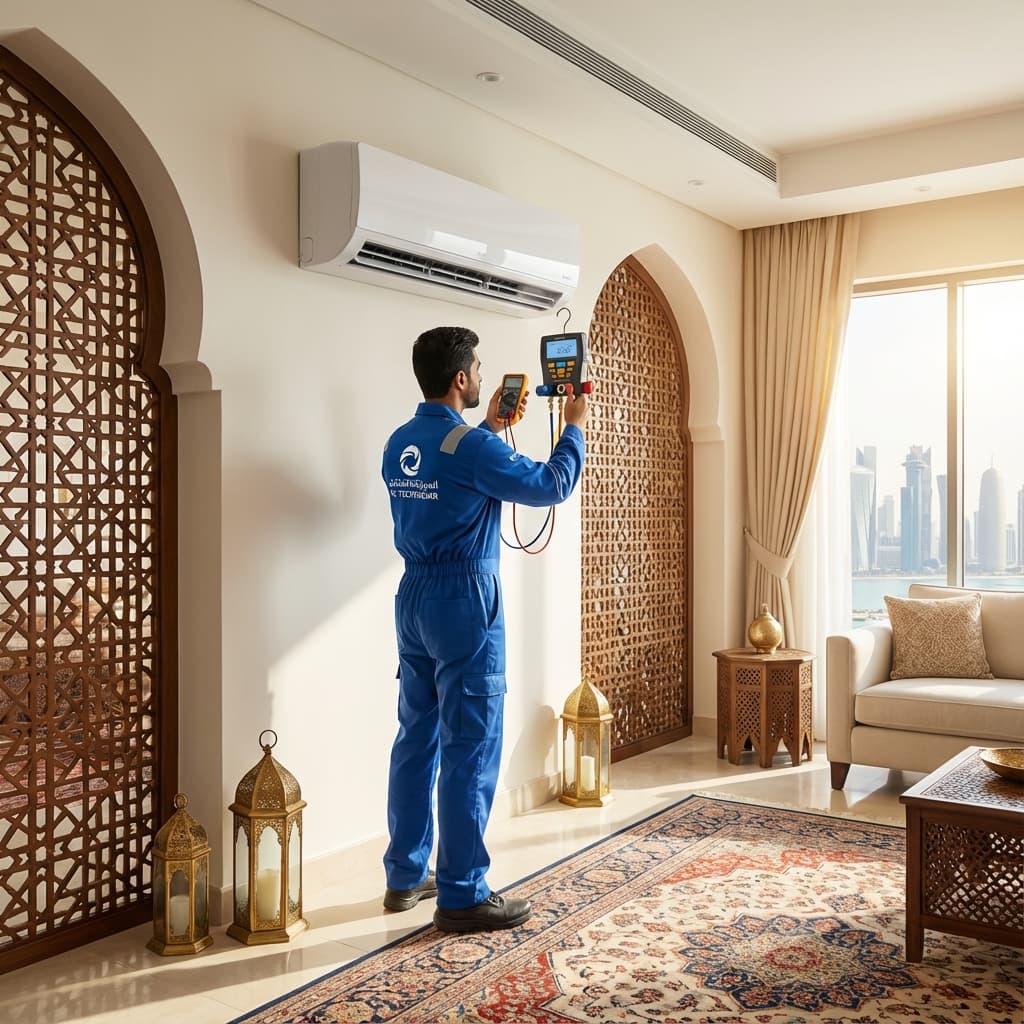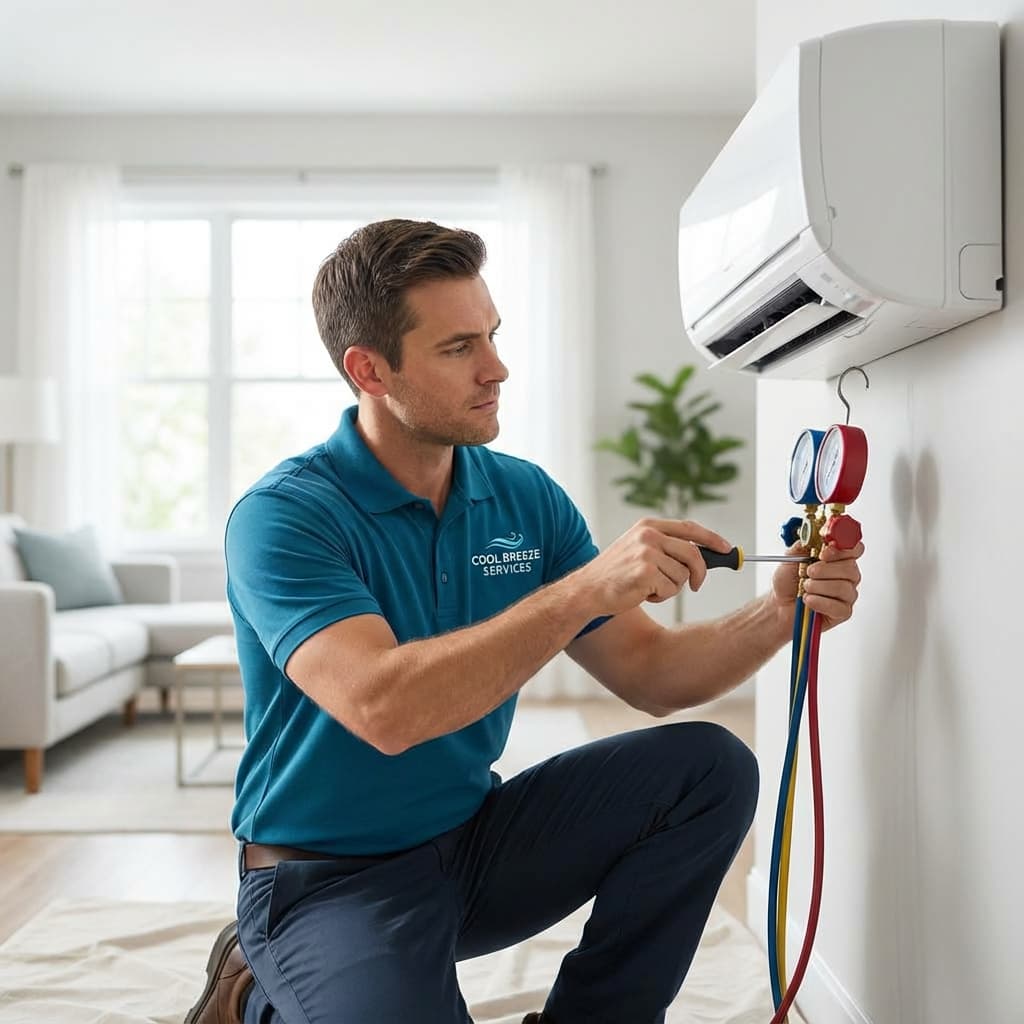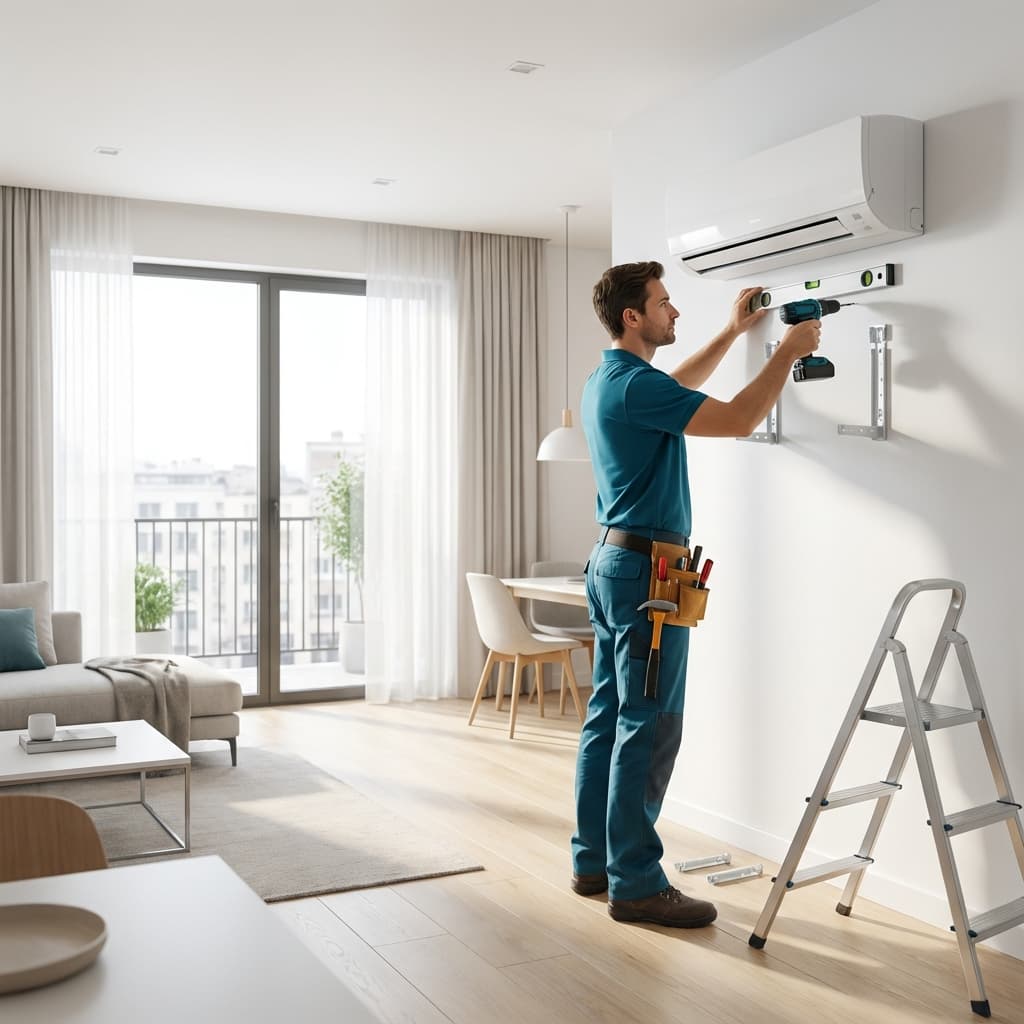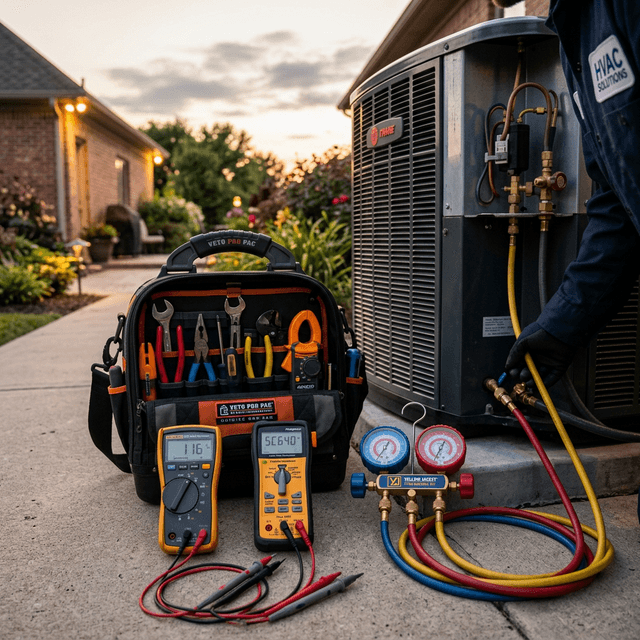
Your AC has stopped working. In Qatar's extreme climate, this is not just an inconvenience — it is a genuine domestic emergency. When indoor temperatures can spike to 40 °C within hours, knowing how to diagnose problems, understand repair costs, navigate legal tenant-landlord responsibilities, and assert your consumer rights is vital. This comprehensive guide serves as your definitive manual for handling AC repair in Qatar, ensuring your home remains safe and cool.
🚨 Safety First: Immediate Emergency Protocol
If your AC emits a burning electrical smell, begins smoking, or makes loud metallic clanging sounds, immediately switch off the unit at the main circuit breaker (DB board). Do not attempt to reset the breaker if it trips repeatedly. This indicates a severe short-circuit or grounded compressor that poses a fire hazard.
Part 1: Diagnosing AC Problems Before Calling a Technician
Before calling a repair service, performing a few basic diagnostic checks can save you the cost of a diagnostic service call. Many common AC issues are caused by simple user errors or minor faults that can be resolved without specialized tools.
1. The Step-by-Step Homeowner Diagnostic Tree
If your AC unit is completely dead (no lights, no fan, no cooling):
- Verify the Main Isolator Switch: Ensure the large red or white isolator switch next to the outdoor compressor or on the wall near the indoor unit is turned to the “ON” position. It is common for housekeepers or painters to switch these off accidentally.
- Inspect the Distribution Board (DB): Check your home's electrical panel. Look for the circuit breaker labeled “AC” or “A/C”. If the breaker switch is pointing down (tripped), push it completely off and then flip it back on. If it trips again instantly, do not force it; you have a direct short-circuit.
- Examine the Remote Control: If the unit doesn't respond to the remote, check the batteries. Replace them with fresh AA/AAA batteries. Often, remote control screens fade or show incorrect modes (like “Heat” instead of “Cool”) due to low battery voltage. Try turning the unit on using the manual override button located under the front flap of the indoor unit.
If your AC runs (air blows) but the air is not cold:
- Check the Mode Setting: Ensure the thermostat is set to “Cool” (indicated by a snowflake symbol on most screens) and not “Fan”, “Dry”, or “Heat”.
- Verify the Setpoint: Ensure the set temperature is at least 3 °C lower than the current room temperature.
- Inspect the Evaporator Coil: Open the front cover and slide out the mesh filters. If the aluminum coils behind the filters are covered in a layer of white frost or ice, your system has restricted airflow or is low on refrigerant. Switch off the cooling mode and run the fan on high for 2 hours to melt the ice before calling a technician.
- Verify Smart Thermostat Connection: If you use a smart thermostat (Nest, Ecobee, or Honeywell Home), check if it is displaying a Wi-Fi disconnection error or an error code (such as “E73” or “No Power to RC Wire”). This often means the safety float switch in your condensate pan has tripped, cutting off power to the thermostat to prevent flooding. Resetting the thermostat won't work until the drain line is cleared.
- Inspect Condensate Safety Float Switch: Look at the indoor drain line connection. If your system is equipped with an inline float switch (a small plastic tee with wires), check if the clear chamber is filled with water. If it is, the switch has shut off the compressor to prevent water overflow. Drain the pipe manually or use a wet/dry vacuum to clear the clog from the outside drain port.
2. Symptom to Diagnostic Matrix
| Symptom | Likely Root Cause | Urgency Level |
|---|---|---|
| Constant Tripping of Breaker | Compressor motor winding shorted, or defective/weak circuit breaker. | 🔴 High (Call tech immediately) |
| AC Blows Warm Air | Blown dual-run capacitor, failed compressor, or complete refrigerant leak. | 🔴 High (Emergency repair required) |
| Water Leaking Indoors | Clogged condensate drain line, frozen evaporator, or cracked drain pan. | 🟡 Moderate (Repair within 24 hours) |
| Squealing/Rattling Noise | Failed blower motor bearings, worn belt, or loose fan blades. | 🟡 Moderate (Repair to avoid motor failure) |
| Musty/Sulphur Smell | Bacterial mold colonization in the drain pan or dead pest in the ductwork. | 🟢 Low (Book during standard hours) |
Part 2: Understanding AC Repair Costs in Qatar (2025)
AC repair costs in Qatar vary based on the type of unit (Split vs. Central), the capacity of the system (Tonnage), and the specific parts needed. Understanding typical pricing ranges helps you identify unfair quotes.
1. Comprehensive Price Matrix (QAR)
| Service / Replacement Type | Split AC Price (QAR) | Central AC / Package Price (QAR) | Avg. Labor Time |
|---|---|---|---|
| Diagnostic Call-Out Fee | QR 50 – 100 | QR 150 – 250 | 30–45 mins |
| Capacitor Replacement (Dual-Run) | QR 120 – 250 | QR 250 – 400 | 30 mins |
| Refrigerant Refill (R410A / R32) | QR 180 – 350 | QR 400 – 800 | 1 hour |
| Blower Fan Motor Replacement | QR 250 – 500 | QR 600 – 1,200 | 1.5 hours |
| PCB Control Board Replacement | QR 350 – 750 | QR 800 – 1,800 | 1–2 hours |
| Compressor Replacement (2.0 Ton) | QR 1,200 – 2,200 | QR 2,500 – 4,500+ | 3–5 hours |
| Condensate Drain Line Flush | QR 100 – 180 | QR 200 – 350 | 45 mins |
⚠️ Avoid Low-Ball “Gas Top-up” Scams
Some independent technicians quote a low QR 50 call-out fee, only to claim your AC needs a gas refill because the pressure is low. If they offer to refill the gas without finding and repairing the leak first, the gas will simply leak out again. A professional company always locates and repairs the leak before adding refrigerant.
Part 3: Deep-Dive into Common Electrical and Mechanical Failures
Understanding the physics behind common AC failures helps you communicate effectively with technicians and make informed repair decisions.
1. Blown Dual-Run Capacitors
The capacitor acts like a temporary battery, providing the electrical boost needed to start the compressor and fan motors. In Qatar, capacitors are the most common failure point. When outdoor temperatures exceed 45 °C, the internal temperature of the condenser unit can reach 65 °C. This extreme heat degrades the dielectric fluid inside the capacitor, causing it to bulge, leak, and lose capacitance. When this happens, the compressor cannot start, resulting in a humming sound and warm air blowing from the vents.
2. Refrigerant Gas Leaks and Environmental Transitions
Refrigerant is the fluid that absorbs heat from your indoor air and releases it outside. A leak in the system drops refrigerant levels, reducing cooling capacity and causing the evaporator coils to freeze.
- The R-22 Phase-out: Older AC units in Qatar use HCFC R-22 gas. Under the Montreal Protocol, Qatar is phasing out R-22 imports. Consequently, R-22 has become expensive and difficult to source. If your 10+ year old unit has an R-22 leak, replacing the system is often more cost-effective than repairing it.
- Eco-Friendly Alternatives: Newer units use R-410A or R-32. R-32 has a lower Global Warming Potential (GWP) and is more energy efficient in high ambient temperatures, making it the preferred choice for modern installations in Doha.
3. PCB Mainboard Failures
The Printed Circuit Board (PCB) is the brain of your AC. It reads temperature inputs, coordinates fan speeds, and controls compressor operation. In Qatar, PCBs are prone to failure due to three main factors:
- Fine Sand Ingress: Fine desert dust penetrates control boxes, creating a layer over warm components that can cause short-circuits.
- Humidity Corrosion: High humidity, especially in coastal areas like Lusail and Al Wakrah, corrodes the copper traces on the circuit board.
- Grid Voltage Spikes: Power fluctuations and surges during peak summer loads can damage the board's microprocessors.
4. Compressor Burnout
The compressor is the heart of the refrigeration cycle. Compressor failure is typically caused by:
- Acid Buildup: High temperatures can cause the compressor oil to break down, forming acid that eats away at the motor winding insulation.
- Liquid Sluggering: If liquid refrigerant returns to the compressor inlet (often due to clogged filters or fan failures), it can cause mechanical failure.
- Oil Starvation: Refrigerant leaks carry oil out of the compressor. Running a system with low refrigerant starves the compressor of lubrication, leading to mechanical seizure.
Part 4: Tenant vs. Landlord Responsibilities under Qatar Law
One of the most common sources of friction between landlords and tenants in Doha is deciding who pays for AC repairs. Qatar law has a clear framework for these responsibilities.
1. The Legal Framework: Rent Law No. 4 of 2008
Under Qatar Rent Law No. 4 of 2008, the landlord is legally obligated to hand over the leased property in good condition and perform all structural maintenance. The law distinguishes between major repairs and minor maintenance:
- Landlord Obligations (Major Repairs): The landlord is responsible for major structural repairs and replacing expensive equipment. This includes replacing a seized compressor, repairing a damaged PCB board, replacing a rusted condenser coil, and replacing the entire AC unit if it reaches the end of its useful life. If the landlord refuses to perform these repairs, the tenant can file a complaint with the Rental Disputes Settlement Committee (RDSC) in Rawdat Al Khail, Doha.
- Tenant Obligations (Minor Maintenance): The tenant is responsible for minor, routine maintenance. This includes cleaning mesh filters monthly, replacing batteries in remotes, and fixing minor damage caused by negligence.
2. Standard Residential Tenancy Clauses
Most standard lease contracts in Qatar include a clause stating: “The tenant is responsible for maintenance up to QR 500, and the landlord is responsible for repairs exceeding QR 500.” Under this clause:
- If an AC repair costs QR 300 (e.g., a capacitor replacement or drain line flush), the tenant pays.
- If an AC repair costs QR 1,400 (e.g., a compressor replacement), the landlord is responsible for the full amount.
The AC Service Contract Dispute: A common point of confusion is who pays for an annual preventative maintenance service contract (which includes 4 diagnostic and washing visits per year). While the tenant is responsible for the cost of individual monthly filter washings, the Rent Disputes Committee generally holds that structural preventative maintenance contracts are the responsibility of the landlord as they protect the property's capital infrastructure. Tenants should negotiate this clause before signing the lease, ensuring the landlord agrees to cover the cost of seasonal professional servicing.
Part 5: MOCI Regulations and Consumer Rights
Qatar's Ministry of Commerce and Industry (MOCI) enforces consumer protection laws that apply to appliance repairs and spare parts. Knowing your rights helps protect you from poor service, overcharging, and substandard replacement components. The Ministry actively audits licensed companies to ensure fair practices are maintained throughout Doha.
- Mandatory Service Warranty: Under MOCI regulations, any registered AC service provider must offer a warranty on their labor. For general maintenance and repairs, the standard warranty is 30 days. For major repairs like compressor replacements, reputable providers offer a 6-month to 1-year warranty on parts.
- Itemized Invoicing: Technicians must provide an itemized invoice detailing the cost of labor, the specific spare parts used, and the warranty terms. Always insist on a formal receipt with the company's official stamp and commercial registration (CR) number.
- Genuine Spare Parts: Consumers have the right to request proof that replacement parts (especially capacitors and PCBs) are genuine and compatible with their system brand. Counterfeit parts are common and can damage your AC.
Part 6: Area-by-Area Doha Service Realities
AC repair logistics vary across different neighborhoods in Doha. Understanding local conditions helps you plan service visits.
1. The Pearl-Qatar, West Bay, and Lusail Marina
Servicing ACs in modern high-rise towers involves specific logistical challenges:
- Building Permits: Most towers require technicians to submit their Commercial Registration (CR), insurance documents, and ID copies to building management to obtain a work permit before entering.
- District Cooling Systems: Many high-rise apartments connect to a district cooling network (such as Qatar Cool). If your unit is not cooling, the issue could be with the district cooling valves or the fan coil unit (FCU) inside your ceiling. Technicians must be trained in FCU and actuator valve troubleshooting.
2. Al Rayyan, Al Wakrah, and Outer Doha Compounds
Villas in these areas are more exposed to sand and dust, which can affect outdoor condenser units:
- Sand Accumulation: Wind-blown sand often accumulates in the bottom pan of outdoor units, blocking drain holes and corroding the compressor base. Technicians need to perform regular deep-cleaning to remove this sand.
- Voltage Stability: Properties in outer areas can experience voltage drops during peak summer months. Installing voltage stabilizers on main AC lines can help prevent PCB damage.
Part 7: Case Study: Troubleshooting a Pearl-Qatar Ducted FCU System
To understand how AC repairs work in practice in Doha's premium properties, let's look at a common scenario in a high-rise tower at Porto Arabia, The Pearl-Qatar.
- The Situation: The tenant notices that the AC is running continuously, the fan is blowing, but the indoor temperature remains at 26 °C despite setting the thermostat to 20 °C. There is a slight whistling sound coming from the ceiling access panel.
- The Diagnosis: Our technician arrives after obtaining a tower entry permit. They open the gypsum ceiling access hatch to inspect the Fan Coil Unit (FCU). They measure the temperature of the chilled water pipes entering the unit. The supply line is cold, but the coil itself is warm. This indicates that chilled water is not flowing through the coil. The technician checks the actuator valve, which controls the water flow based on signals from the thermostat. They find that the actuator motor has failed in the closed position due to electrical wear. The whistling sound is caused by air being forced through a dirty air filter that has collapsed under fan pressure.
- The Repair: The technician closes the manual isolation valves to block water flow, replaces the failed 24V actuator valve with a new Honeywell unit, and installs a clean synthetic media filter. They open the isolation valves and bleed the air from the coil using the air vent valve. Within 15 minutes, chilled water flows through the coil, dropping the supply air temperature to a cool 12 °C.
- The Outcome: The tenant's apartment cools down to 21 °C within an hour. The repair costs QR 650 for parts and labor, which is billed directly to the landlord since actuator valves are structural components under Qatar Rent Law.
Part 8: Comprehensive AC Repair Checklist for Landlords & Property Managers
If you own or manage rental properties in Doha, maintaining the AC systems is essential to protect your property value and ensure tenant satisfaction. Use this checklist to handle repairs efficiently:
- Verify Tenant Reports: Before dispatching a technician, ask the tenant to confirm if other units in the building are cooling (to rule out building-wide chiller issues) and if they have checked the circuit breakers.
- Establish a Service Agreement: Partner with a licensed AC repair company that offers annual maintenance contracts. This ensures regular inspections, reduces the risk of major breakdowns, and gives you priority emergency response times.
- Keep Service Records: Maintain a file for each property containing invoices, diagnostic reports, and details of replaced parts (e.g., compressor serial numbers). This helps you track warranties and plan replacements.
- Pre-Authorize Standard Repairs: Set a pre-approved budget with your service provider (e.g., QR 300) for standard repairs like capacitor replacements or drain flushes. This allows technicians to perform minor repairs immediately without waiting for approval, keeping tenants happy and preventing further issues.
Part 9: Frequently Asked Questions about AC Repairs
Here are answers to common questions about AC repairs under Qatar's climate and regulations.
1. My AC trips the circuit breaker immediately after turning on. Can I reset it?
No. If a circuit breaker trips immediately after being reset, it indicates a direct electrical short-circuit or a grounded compressor. Attempting to force the breaker to stay on can cause electrical fires, damage your home's wiring, or damage the AC unit's electronics. Keep the breaker off and call a certified technician to inspect the compressor windings and electrical connections.
2. Why does my AC blow hot air instead of cool air?
If your AC is blowing warm or hot air, it means the indoor fan is running but the outdoor compressor is not. The most common causes are a blown run capacitor (preventing the compressor from starting), a tripped outdoor overload switch, or a complete loss of refrigerant gas due to a leak. Turn off the cooling mode and schedule a service visit.
3. How do I know if my AC compressor has failed?
Common signs of compressor failure include: (1) the indoor unit runs but the outdoor unit makes a loud clicking or humming sound without starting, (2) the AC repeatedly trips the circuit breaker, (3) there are heavy oil stains around the outdoor unit base, or (4) the technician measures a high electrical draw (LRA) without compressor operation. A seized compressor must be replaced.
4. What is the average lifespan of an AC unit in Qatar?
Due to high usage and harsh summer conditions, the average lifespan of a split AC in Qatar is 8 to 12 years. Central packages and ducted systems can last 12 to 15 years with regular quarterly maintenance. Without maintenance, units can fail within 5 years due to compressor burnouts or coil corrosion.
5. How can I file a complaint with MOCI if a repair company does not honor their warranty?
If a repair company fails to honor their service warranty or uses counterfeit parts, you can file a formal complaint with the Ministry of Commerce and Industry (MOCI) by calling their hotline at 16001, or submitting a complaint through the MOCI mobile app. Make sure to provide copies of the commercial invoice, the company's stamp, and any written correspondence.
🚨 ACQatars Emergency Line: +974 3395 6298
Available 24/7, 365 days a year. Save this number — you'll thank yourself when your AC decides to quit at midnight. We serve all areas of Qatar with a 30-minute average response time. Book online now →