Mitsubishi air conditioners, including Mitsubishi Electric and Mitsubishi Heavy Industries, are known for their high reliability and efficiency. They are commonly installed in villas and premium apartments in Qatar, particularly in Al Waab, West Bay, and Lusail. However, the extreme summer temperatures and sandstorms in Qatar can cause wear and tear on these systems over time.
If your Mitsubishi split, ducted, or VRF AC system is showing error codes, blowing warm air, or not starting, you need expert help. Mitsubishi systems feature advanced inverter circuits that require technicians with specialized diagnostic training. This guide walks you through troubleshooting steps, common error codes, typical repair costs in QAR, and landlord duties. We cover all areas in Qatar, including Doha, Al Sadd, Al Wakrah, Al Rayyan, and Al Gharafa.
💬 Expert Mitsubishi AC Repair via WhatsApp
Is your Mitsubishi AC flashing an error code or blowing warm air? Message our certified technicians on WhatsApp for fast assistance.
Chapter 1: The Mitsubishi AC Landscape in Qatar's Summer
Mitsubishi Electric and Mitsubishi Heavy Industries are separate brands, but both are popular choices for luxury properties in Qatar. These units are designed to withstand high ambient temperatures, often running efficiently even when outdoor heat exceeds 52 °C. They are commonly installed in premium residential communities in Doha and Al Waab.
Despite their quality, Mitsubishi systems face unique challenges in Qatar's environment. Fine desert sand can build up on the outdoor condenser fins, reducing the unit's ability to release heat. This buildup causes the compressor to draw more electrical current, leading to higher energy bills and eventual component failure.
Coastal humidity in areas like The Pearl-Qatar and West Bay Lagoon can also cause salt corrosion on outdoor coils. This corrosion can lead to small refrigerant leaks over time, reducing cooling capacity. Regular maintenance is essential to protect these premium systems and keep them running efficiently.
Chapter 2: Deciphering Mitsubishi AC Error Codes
Mitsubishi AC systems feature self-diagnostic controllers that display error codes when a fault is detected. Understanding these codes helps you identify the severity of the problem before scheduling a service visit:
1. Mitsubishi E6 / E9 Error Codes: Communication Errors
The E6 or E9 code indicates a communication failure between the indoor unit and the outdoor unit. This is common in older compounds in Al Rayyan and Abu Hamour where electrical cables have degraded due to heat exposure. Damaged or loose signal wires are the typical cause of this communication fault.
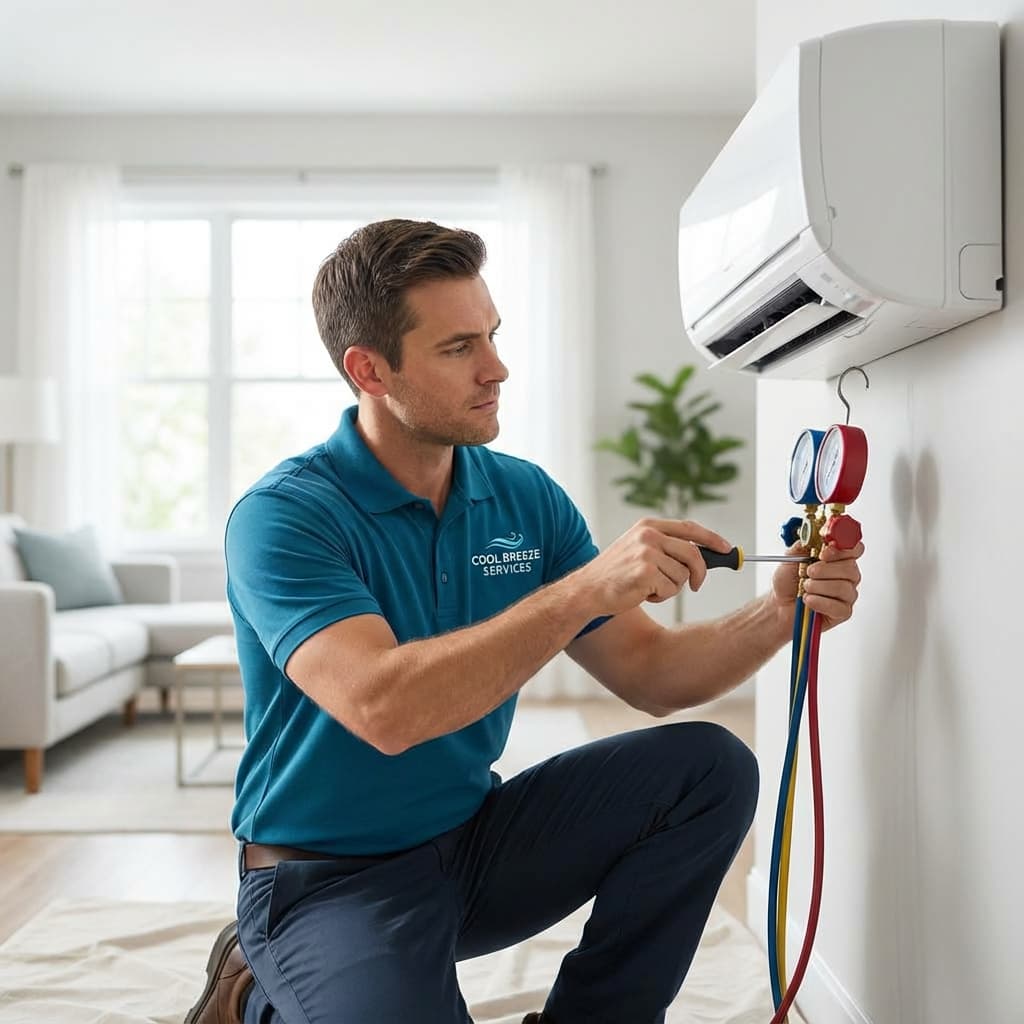
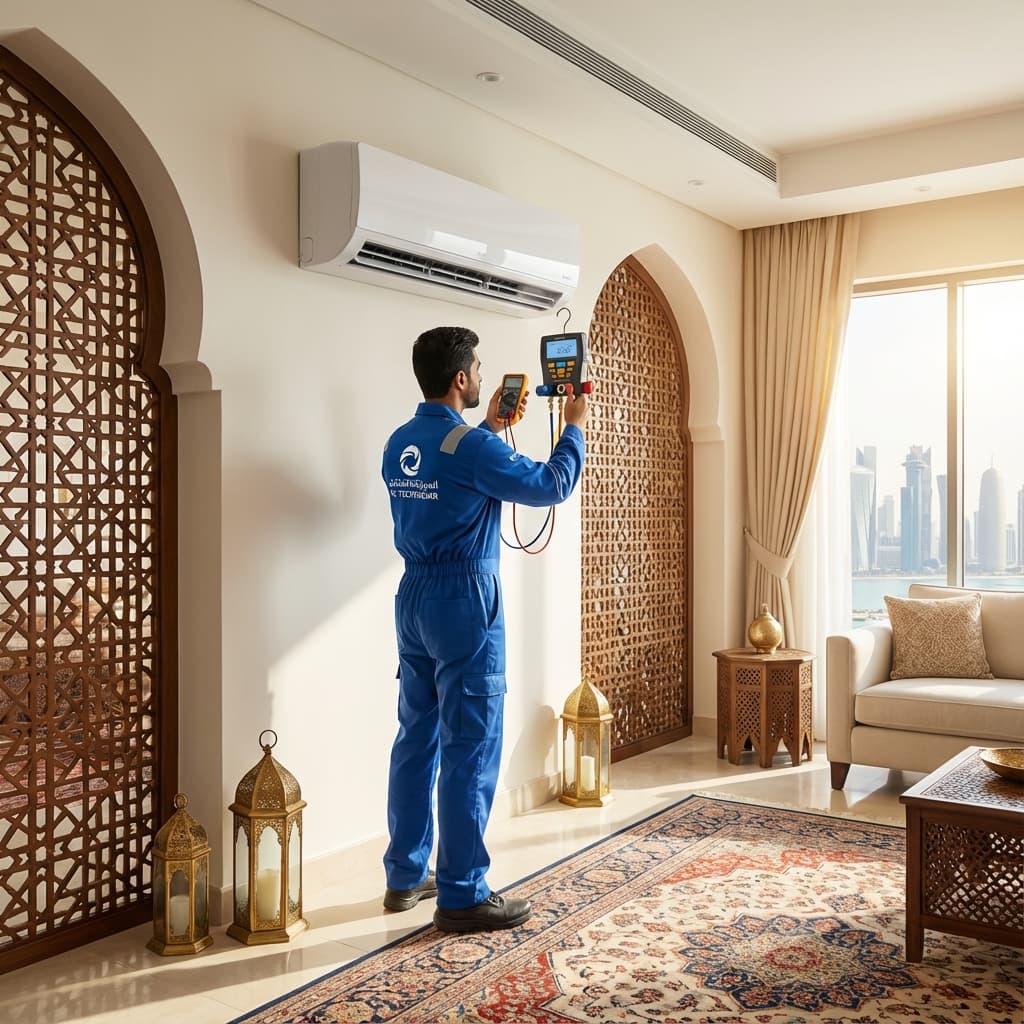
Our technicians use multimeters to check communication voltage signals between the indoor and outdoor control boards. We replace damaged wires and inspect the control boards for signs of electrical damage. Replacing the communication wire usually resolves the E6/E9 fault.
2. Mitsubishi U4 / UP Error Codes: Compressor Temperature Faults
The U4 or UP code indicates that the compressor discharge temperature has exceeded safe operating limits. This is a safety feature designed to prevent the compressor from overheating and seizing. It is often caused by low refrigerant levels, a blocked condenser coil, or a faulty discharge sensor.
When U4 appears, the outdoor unit will shut down to allow the compressor to cool. Our technicians check refrigerant pressures, inspect the condenser coil for dust buildup, and test the discharge sensor resistance. Resolving the underlying cause protects the compressor and clears the error code.
3. Mitsubishi P8 / P9 Error Codes: Indoor Coil Freeze Protection
The P8 or P9 code indicates that the indoor evaporator coil temperature has dropped too low, triggering freeze protection. This safety feature shuts down the system to prevent ice from forming on the coils. It is commonly caused by dirty air filters, a blocked blower wheel, or restricted airflow.
To diagnose P8/P9, check if your indoor filters are clean and ensure return grilles are not blocked. If the filters are clean, the issue may be a failed indoor fan motor or low refrigerant. Our technicians can inspect the fan motor and test refrigerant levels to resolve the issue.
4. Mitsubishi F1, F2, F9 Error Codes: Sensor Failures
These codes indicate a fault with the system's temperature sensors (thermistors). F1 relates to the indoor coil sensor, F2 to the indoor ambient sensor, and F9 to the outdoor discharge sensor. These sensors fail when their electrical resistance drifts outside normal parameters due to age or moisture.
Replacing a faulty sensor is a straightforward repair that takes about 30 minutes. Our technicians carry genuine Mitsubishi spare sensors in their service vans. We use only original parts to maintain compatibility and ensure accurate temperature readings.
Chapter 3: DIY Troubleshooting Steps for Mitsubishi ACs
Before calling a professional technician, there are several simple checks you can perform. Sometimes the issue is caused by a minor setting error that can be easily corrected:
Step 1: Check Thermostat Settings and Batteries
Ensure your remote control is set to “COOL” mode and the temperature setpoint is below the room temperature. If the remote is set to “AUTO” or “FAN”, the outdoor unit will not start. If the remote screen is blank, replace the batteries with fresh AAA cells.
If the unit does not respond to the remote, try using the manual power button on the indoor unit. This button is usually located behind the front grille panel or near the display indicator. If the manual button starts the unit, the remote control or receiver board may be defective.
Step 2: Check Circuit Breakers and Isolators
Go to your home's main electrical panel and check if the breaker for the AC has tripped. If it has, reset the breaker by pushing it to the “OFF” position, then flipping it to “ON”. Also check the outdoor isolator switch next to the compressor unit to ensure it is switched “ON”.
If the breaker trips again immediately when the AC starts, do not try to reset it again. This indicates a severe electrical fault, such as a shorted compressor winding or a failed fan motor. Leave the breaker off and contact a certified technician to inspect the system.
Step 3: Clean the Indoor Mesh Filters
A dirty filter restricts airflow, reducing cooling performance and causing the indoor coils to freeze. Open the front panel of the indoor unit, slide out the mesh filters, and wash them with warm water. Allow them to dry completely before sliding them back into place.
In Qatar's dusty environment, clean your filters every two weeks during the summer. Regular cleaning keeps your system running efficiently and helps prevent dust buildup on the coils. Never run your AC without filters, as this will clog the evaporator fins.
💬 Need Professional Mitsubishi AC Repair?
Our certified technicians provide emergency repair services in Al Sadd, West Bay, Lusail, Al Wakrah, and Al Rayyan.
Chapter 4: Tenant vs. Landlord Responsibilities under Qatar Law
Lease agreements in Doha and surrounding areas outline maintenance responsibilities for landlords and tenants. Under Qatar Rent Law No. 4 of 2008, the landlord is responsible for major structural repairs and maintenance. This includes replacing failed compressors, repairing control boards, and resolving refrigerant leaks.
The tenant is responsible for routine maintenance and repairs resulting from misuse or neglect. This includes cleaning filters regularly and replacing remote control batteries. If a repair is needed because filters were never cleaned, the landlord may dispute the cost.
Most lease contracts in Qatar include a clause stating the tenant covers repairs up to QR 500. Under this clause, the tenant pays for minor items like capacitor replacements or drain flushes. The landlord covers any repair cost exceeding QR 500, such as compressor or fan motor replacements.
Chapter 5: Mitsubishi AC Repair Cost Matrix in Qatar (2025)
Understanding standard pricing ranges helps you evaluate quotes from service providers. Here is a breakdown of estimated repair costs for Mitsubishi split and ducted AC units in Doha:
| Repair Description | Mitsubishi Split AC (QAR) | Mitsubishi Package AC (QAR) |
|---|---|---|
| Diagnostic & Inspection Visit | QR 80 – 120 | QR 150 – 250 |
| Inverter Board (PCB) Repair | QR 450 – 750 | QR 900 – 1,800 |
| Run Capacitor Replacement | QR 150 – 250 | QR 300 – 450 |
| Refrigerant Leak Repair & Refill | QR 250 – 450 | QR 500 – 900 |
| Blower Fan Motor Replacement | QR 350 – 600 | QR 700 – 1,200 |
| Inverter Compressor (2.0 Ton) | QR 1,500 – 2,500 | QR 3,000 – 5,500 |
Chapter 6: Localized Service Realities in Qatar Neighborhoods
The logistics of AC repair vary depending on your neighborhood in Doha. Each area has specific access requirements and environmental factors that affect servicing.
1. Al Waab and Al Rayyan Villa Compounds
Villas in Al Waab and Al Rayyan compounds often use large Mitsubishi package or ducted systems. These units are installed on rooftops or in dedicated utility yards. Access to rooftops requires ladders and coordination with compound maintenance team.
These outdoor units are exposed to high amounts of sand and dust. This buildup requires regular pressure washing to maintain efficiency. We recommend scheduling annual servicing before the summer heat starts.
2. West Bay and Lusail High-Rises
Apartments in West Bay and Lusail often use Mitsubishi ducted FCUs. These units are installed above gypsum ceilings, making access difficult. Technicians must use small access panels to check valves and control boards.
Work permits are required for technician entry in most towers. Service companies must submit commercial registrations, technician IDs, and insurance details. Scheduling repairs in advance helps prevent delays at the security gate.
Chapter 7: Frequently Asked Questions about Mitsubishi AC Repair
Here are answers to common questions about Mitsubishi AC repairs in Qatar:
1. Why is my Mitsubishi AC display showing a flashing green light?
A flashing green light indicates that the system has detected a fault. Check the remote control or wall thermostat for an error code (such as E6 or U4). Turn off the AC and contact a technician to diagnose the issue and prevent damage.
2. Can I use non-original parts for Mitsubishi AC repairs?
We do not recommend using non-original parts for Mitsubishi inverter systems. Inverter boards and sensors are highly sensitive and require precise specifications. Using generic parts can cause communication errors and void your warranty.
3. How long does it take to repair an inverter control board?
Diagnosing and repairing an inverter board (PCB) usually takes 1 to 2 days. If the board is severely damaged, it must be replaced with a new unit. Our technicians carry a stock of common Mitsubishi PCBs to speed up repairs.
🚨 Contact ACQatars: +974 3395 6298
Our customer service team is available 24/7 to schedule emergency AC repairs in Doha, Al Sadd, West Bay, Lusail, Al Wakrah, and Al Rayyan. Message us on WhatsApp for a fast response.