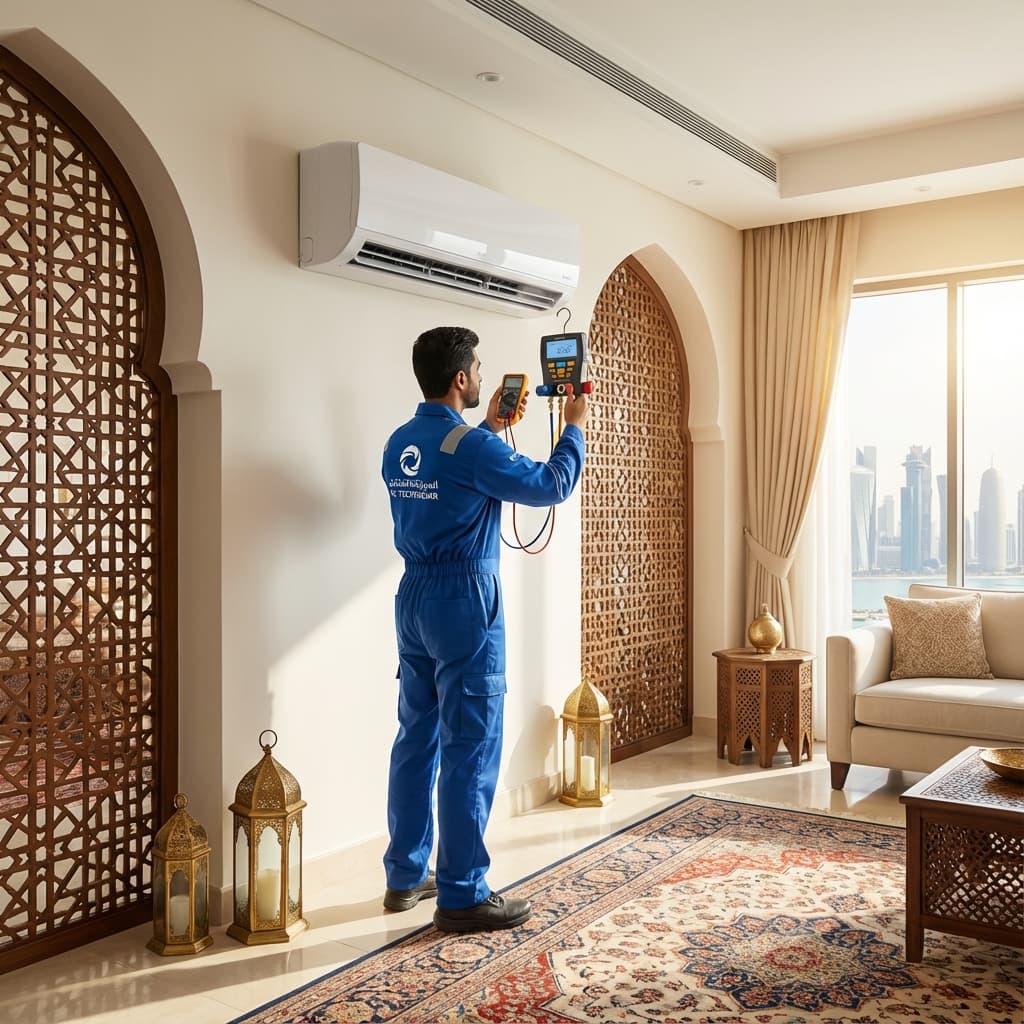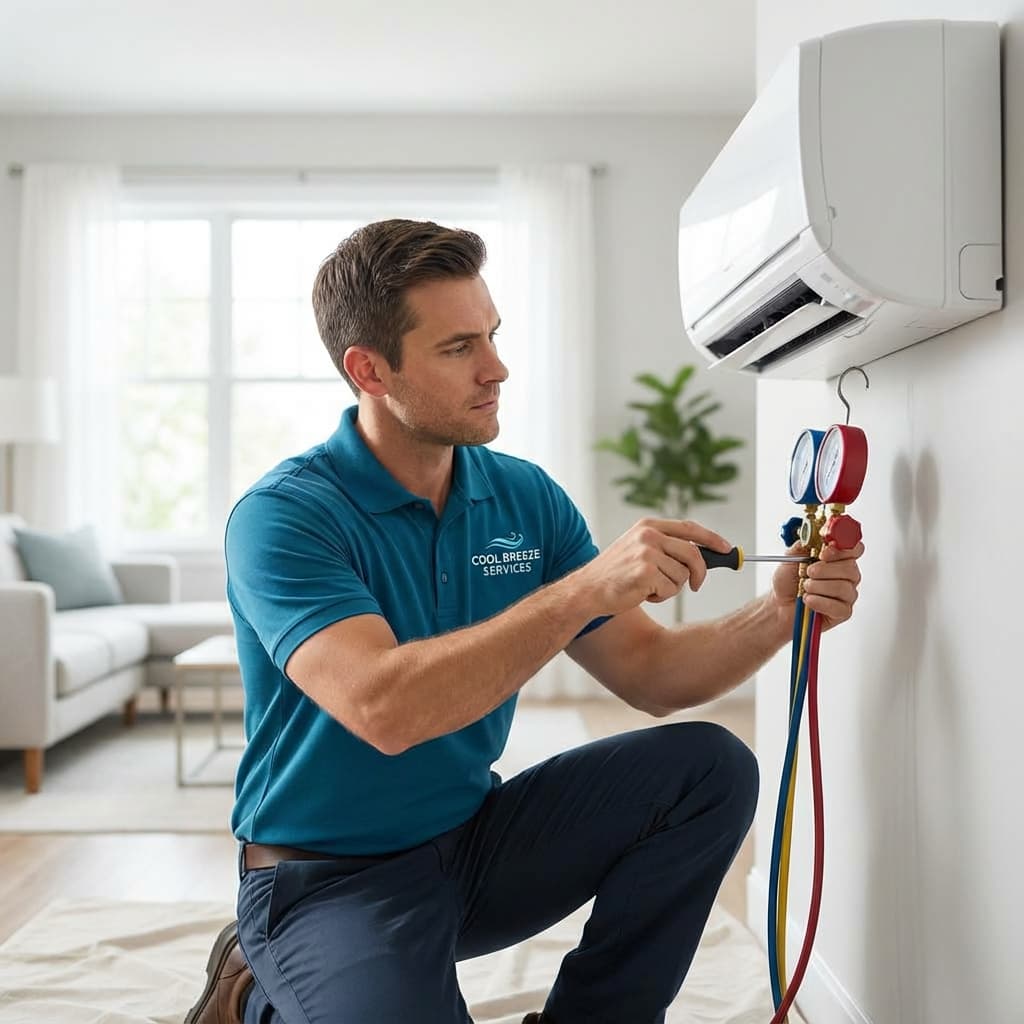
A leaking air conditioner is one of the most common issues faced by residents in Qatar. In our high-humidity summer climate, especially in coastal areas like The Pearl-Qatar and Lusail, units remove massive amounts of water. If that water cannot drain cleanly, it will overflow and drip down your walls.
If your split or central AC is dripping water inside your home, you must act quickly. Standing water can damage drywall, ruin paint, and create mold growth behind wall panels. This guide explains why your AC is leaking, how to fix it yourself, and when to call a professional technician. We serve all locations in Qatar, including Doha, West Bay, Al Sadd, Al Wakrah, and Al Rayyan.
💬 Instant AC Water Leak Repair via WhatsApp
Is your indoor unit dripping water onto your floors? Send us a message on WhatsApp for fast, same-day service.
Chapter 1: The Physics of AC Condensation in Qatar's Climate
To understand why your AC is leaking water, it helps to understand how the system cools your home. An air conditioner does not create cold; it absorbs heat and moisture from the indoor air. When warm, humid indoor air passes over the cold evaporator coils, water vapor condenses into liquid water.
This condensation process is similar to water droplets forming on the outside of a cold glass of soda. In Doha, where outdoor relative humidity routinely exceeds 85% during August and September, the volume of water produced is massive. A typical 2.0-ton split AC can remove up to 3 liters of water from the air every hour.
Under normal conditions, this water drips into a drain pan located beneath the evaporator coils. The water then flows by gravity through a plastic drain pipe to a floor drain or utility outlet. If the pipe is blocked or the pan is cracked, the water has nowhere to go and will overflow.
Chapter 2: Common Causes of AC Water Leaks in Qatar Homes
Our technicians troubleshoot AC water leaks daily across Doha and surrounding neighborhoods. Here is a breakdown of the most common causes we find:
1. Algae and Slime Clogs in the Drain Line
The warm, damp environment of the condensate drain pan is an ideal breeding ground for algae and mold. When dust and sand blow through the filters, they mix with the moisture in the pan, forming a thick, jelly-like slime. This slime flows into the drain pipe and eventually blocks the water flow.
This is the most common cause of water leaks in Al Sadd and West Bay apartments. Regular filter cleaning helps reduce the amount of dust that enters the pan. Flushing the drain line with vinegar once every two months is also effective in preventing slime buildup.
2. Frozen Evaporator Coils
If your AC has restricted airflow or is low on refrigerant, the temperature of the evaporator coils can drop below freezing. This causes the condensation on the coils to turn into solid ice. When the ice melts, it releases a large volume of water that overflows the drain pan.
Restricted airflow is usually caused by dirty mesh filters or a blocked blower fan wheel. Low refrigerant is caused by slow leaks at copper joints. If you see ice forming on your indoor unit coils, turn off the cooling mode immediately to prevent compressor damage.
3. Improper Drain Pipe Slope (Gravity Issues)
Condensate drain lines rely on gravity to move water out of the indoor unit. The drain pipe must slope downward from the unit to the drain outlet. If the pipe is installed flat or slopes upward, water will back up and overflow.
This issue is common in newer properties in Lusail and Fereej Al Nasr where installation was rushed. Over time, plastic drain pipes can also sag due to high heat, creating traps that collect water and dust. Correcting the pipe slope or installing a condensate pump resolves this issue.
4. Damaged or Rusted Drain Pan
Older AC units, especially window units or older splits in areas like Al Mansoura, have metal drain pans. Continuous exposure to moisture can cause these pans to rust and develop holes. When the pan has holes, water drips directly through the bottom of the unit instead of flowing into the drain line.
Modern units use plastic drain pans, which do not rust but can crack due to physical damage. If your technician finds a cracked or rusted drain pan, it must be replaced. In older systems, replacing the entire indoor coil assembly is sometimes necessary.
Chapter 3: Step-by-Step DIY Fixes for a Dripping AC
If your indoor AC unit is leaking, there are several troubleshooting steps you can take. Sometimes you can clear the blockage yourself without needing specialized tools.
Step 1: Switch Off the System Immediately
Turn off the AC unit using the remote and switch off the isolator switch on the wall. Running a leaking AC will only produce more water, increasing the risk of damage to your home. Do not turn the unit back on until the source of the leak has been identified and resolved.
Place towels or bucket under the unit to collect any remaining water. This is especially important in high-rise apartments in West Bay and The Pearl to prevent damage to floors. Wipe up any standing water on the walls to prevent mold growth.
Step 2: Clean the Indoor Mesh Filters
Open the front cover panel of the indoor unit and slide out the mesh filters. If the filters are clogged with dust, wash them with warm water and mild soap. Allow them to dry completely before sliding them back into their tracks.
If the coils behind the filters are covered in ice, leave the filters out. Switch the AC mode to “FAN ONLY” and run the blower on high for 2 hours to melt the ice. Once the ice has melted and the filters are dry, reinstall them and test if the unit cools without leaking.
Step 3: Flush the Drain Line from the Outside
If the drain pipe exits onto a balcony or floor trap, you can try to clear the clog from the outside. Connect a wet/dry shop vacuum to the end of the drain pipe and seal the connection with a wet cloth. Turn on the vacuum for 60 seconds to suck out any accumulated slime, sand, and standing water.
You should see a mix of dirty water and algae exit into the vacuum canister. After vacuuming, pour a liter of clean water down the indoor drain pan to verify that the line flows freely. If the water drains quickly, your line is clear.
💬 Need Professional Help to Clear Your Drain?
Our technicians use high-pressure nitrogen to clear blocked drain lines in Al Sadd, West Bay, Lusail, Al Wakrah, and Al Rayyan.
Chapter 4: Tenant vs. Landlord Rules for AC Water Leaks in Qatar
AC water leaks are a common source of disagreement between landlords and tenants in Doha. Under Qatar Rent Law No. 4 of 2008, the responsibility for repair costs depends on the cause of the leak. Understanding these rules helps resolve disputes quickly.
The landlord is responsible for resolving structural defects that cause water leaks. This includes correcting an improper drain pipe slope, replacing a cracked drain pan, or replacing failed condensate pumps. If the leak has damaged plaster walls or ceilings, the landlord must cover the cost of restoration.
The tenant is responsible for damage caused by neglecting basic maintenance tasks. If the drain line clogs because the tenant never cleaned the mesh filters, the landlord may dispute the cost. Regular filter cleaning is the tenant's legal obligation to protect the property from water damage.
Lease contracts in Al Sadd and West Bay compounds typically state the tenant covers maintenance up to QR 500. Under this clause, clearing a blocked drain line (usually QR 100 to QR 180) is paid by the tenant. Replacing structural components like the drain pan or coils is covered by the landlord.
Chapter 5: AC Drain Clearing and Repair Costs in Doha (2025)
Understanding standard pricing ranges helps you evaluate quotes from service providers. Here is a breakdown of estimated costs for AC drain repairs and clearing in Qatar:
| Service Type | Split AC Cost (QAR) | Central AC Cost (QAR) |
|---|---|---|
| Standard Drain Flush (Water/Vacuum) | QR 100 – 150 | QR 200 – 300 |
| High-Pressure Nitrogen Flush | QR 150 – 200 | QR 250 – 400 |
| Condensate Pump Replacement | QR 250 – 450 | QR 500 – 800 |
| Drain Pipe Re-sloping / Modification | QR 200 – 350 | QR 400 – 700 |
| Evaporator Coil Chemical Clean | QR 150 – 250 | QR 355 – 600 |
Chapter 6: Localized Service Realities in Qatar Neighborhoods
The logistics of AC drain repairs vary depending on your neighborhood in Doha. Each area has specific access requirements and environmental factors that affect servicing.
1. High-Rise Condensate Challenges in West Bay and The Pearl
High-rise apartments in West Bay and Porto Arabia use complex ducted Fan Coil Units (FCUs). These units are installed behind gypsum ceilings, making access difficult. Technicians must open small access hatches to locate and clear the drain lines.
Because these units are installed above drywall ceilings, a water leak can cause severe damage. Most buildings require installing secondary drain pans with safety switches. If the primary drain clogs, the safety switch shuts off the AC before water can damage the ceiling.
2. Sandbox Realities in Al Rayyan and Al Wakrah Compounds
Villa compounds in Al Rayyan and Al Wakrah are exposed to high amounts of sand and dust. This sand enters the indoor blower fan and settles in the drain pan. When sand mixes with water and algae, it forms a heavy mud that is difficult to clear.
Normal vacuuming is often not enough to clear these mud clogs. Technicians use high-pressure nitrogen to flush the lines completely. Deep-cleaning the indoor unit coils once a year is vital to prevent mud clogs in these areas.
Chapter 7: Frequently Asked Questions about AC Water Leaks
Here are answers to common questions about air conditioner water leaks in Qatar:
1. Can I run my AC if it is leaking water inside?
No. Running a leaking AC will only produce more water, increasing the risk of damage to your home. Switch off the system immediately and do not turn it back on until the drain line is cleared.
2. Why does my AC leak water when it is turned off?
If your AC leaks water after being turned off, it is usually due to a frozen evaporator coil. When the system is turned off, the ice on the coils melts rapidly, releasing a large volume of water.
3. How often should I clear my AC drain line?
In Qatar's climate, we recommend flushing your drain line with vinegar every two months during summer. Have a professional technician flush the line with nitrogen or pressurized water during annual servicing.
🚨 Contact ACQatars: +974 3395 6298
Our team is available 24/7 to handle emergency AC repair services in Doha, Al Sadd, West Bay, Lusail, Al Wakrah, and Al Rayyan. Send us a message on WhatsApp for instant booking.