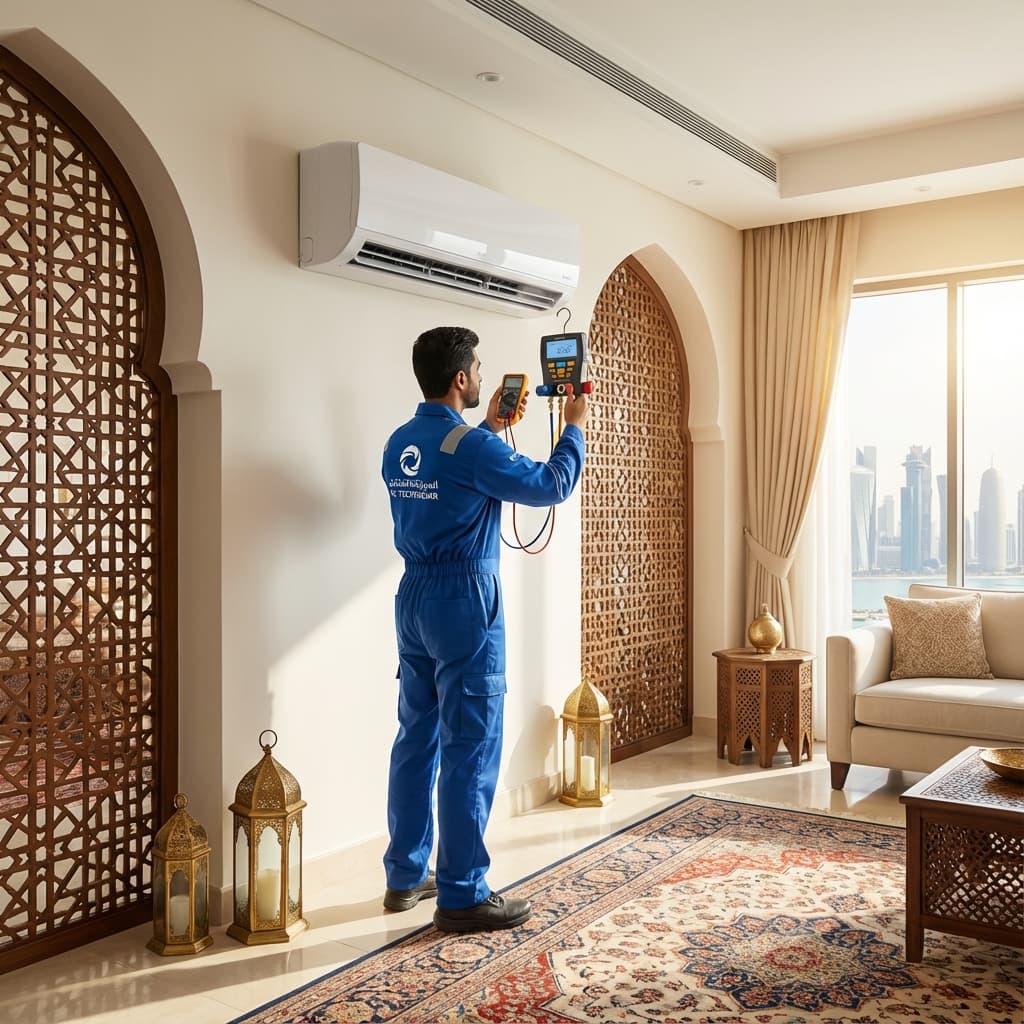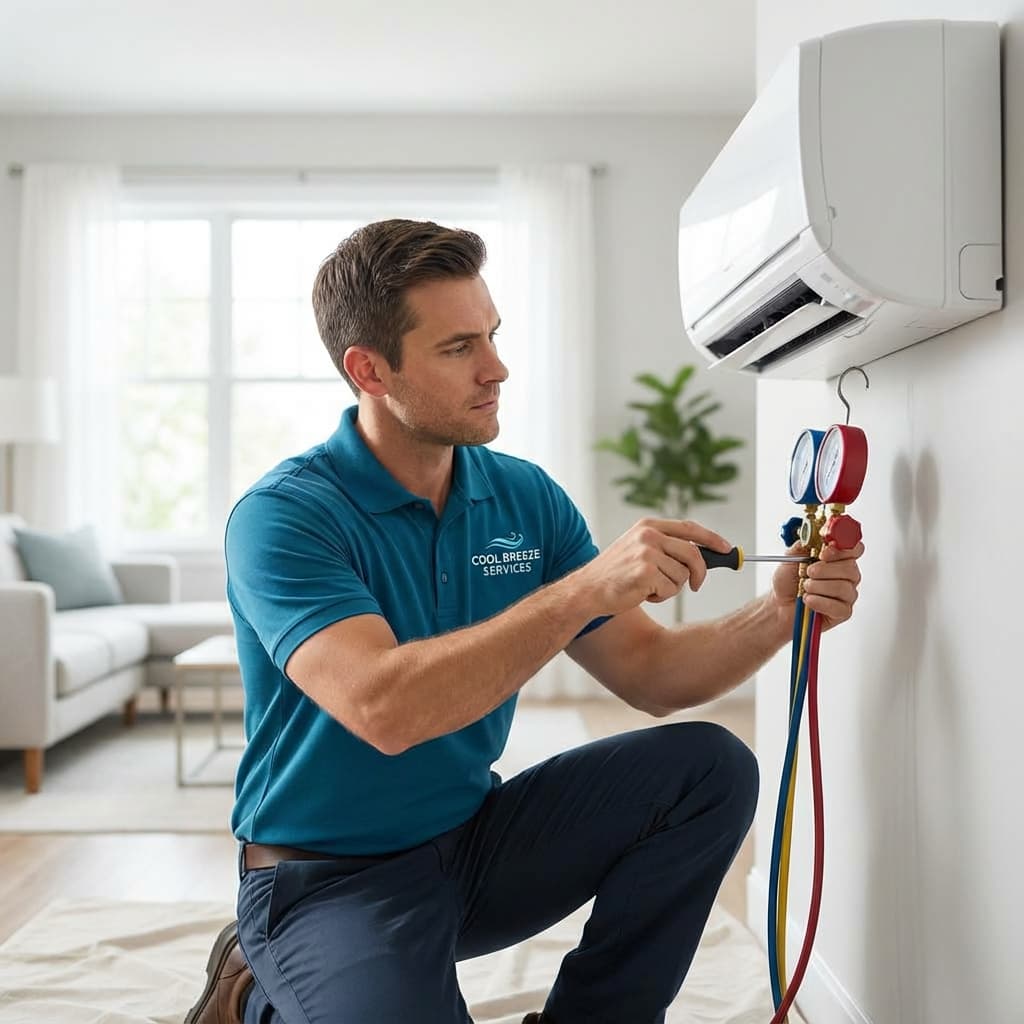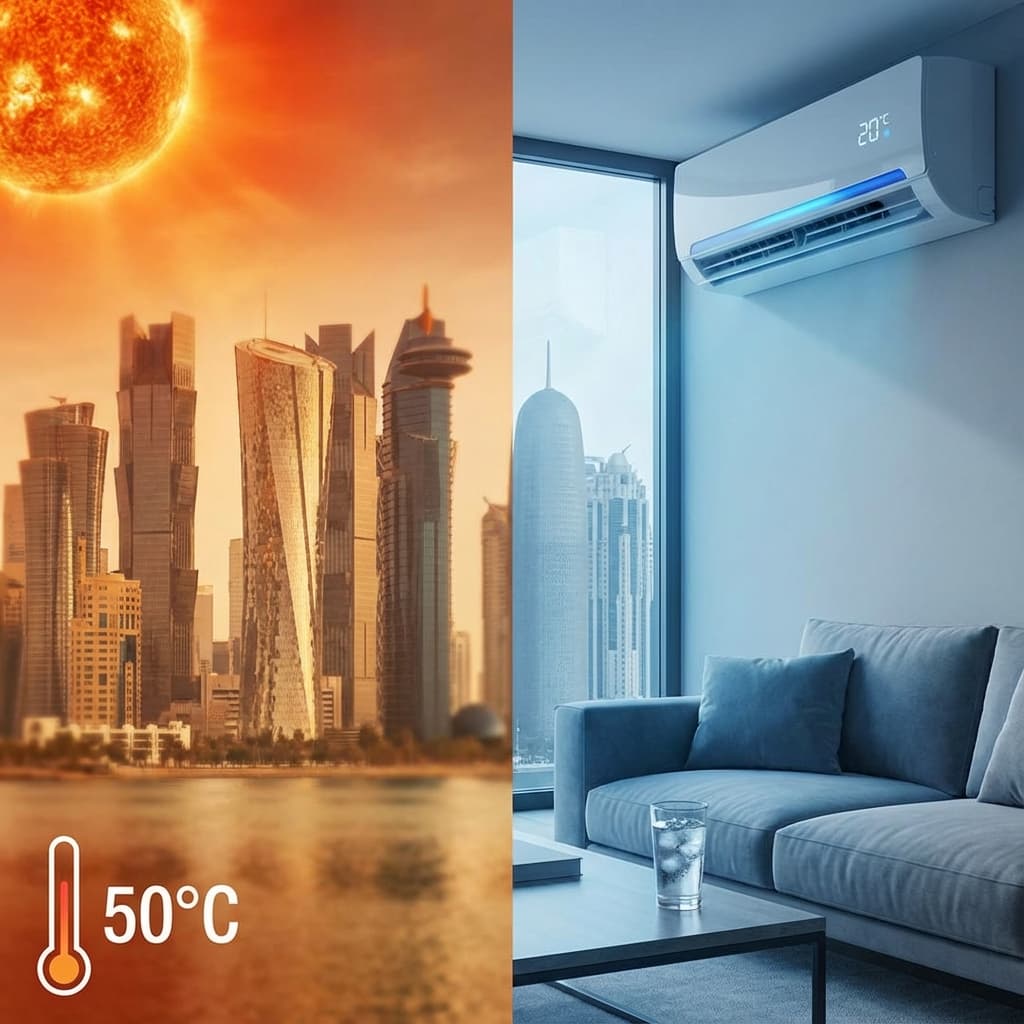
Your AC is running, the compressor is humming, but the room isn't getting cold. In Qatar's summer heat — where indoor temperatures can reach 38°C within hours of AC failure — diagnosing the problem quickly is critical. This guide walks you through every possible cause of poor cooling, from the ones you can fix yourself in 5 minutes to those that need a certified technician. Work through the checklist in order before calling for help.
If It's Above 43°C Outdoors: Call Now
During Qatar's peak summer (June–August), AC failure is a medical emergency for vulnerable people. If children, elderly, or anyone with a medical condition is in the property, call +974 3395 6298 immediately for emergency service rather than spending time troubleshooting.
Step 1: The 5-Minute Self-Check (Before Calling Anyone)
Run through these quick checks first — they solve about 15–20% of "AC not cooling" calls without any service visit needed:
Check 1: Mode Setting
Confirm your remote is set to COOL mode (snowflake icon), not FAN or DRY mode. This sounds obvious, but it's surprisingly common, especially if children have used the remote or after a power outage resets settings.
Check 2: Set Temperature
The set temperature must be lower than the current room temperature for the compressor to run. If the room is 28°C and the AC is set to 28°C or above, it won't cool — it thinks it's already at the target. Set it to 20°C temporarily to test.
Check 3: Air Filter Condition
Open the front panel and look at the filters. If they are coated in gray dust and you can't see through the mesh, they are blocked. Wash them now — a severely blocked filter reduces cooling capacity by 30–50% and can cause the evaporator to freeze over, completely stopping cooling.
Check 4: Outdoor Unit Obstruction
Go outside and check the compressor. Is anything blocking the airflow? Cardboard, a placed object, sand accumulation blocking the coil fins, or even a tarpaulin someone has draped over it? The outdoor unit needs clear air circulation on all sides to reject heat.
Check 5: Circuit Breaker
Check your electrical panel. Is the breaker for the AC in the ON position? A tripped breaker means the indoor unit might appear to run (fan works on many designs even without compressor power) but no cooling occurs. Reset if tripped — but if it trips again immediately, call a technician (electrical fault).
Step 2: If Filters Are Clean and Mode Is Correct
Is the Outdoor Unit Actually Running?
Go to your outdoor compressor unit. Stand near it for 30 seconds. You should hear the compressor running (a steady hum) and feel warm air being blown out the top or side. If the outdoor unit is silent while the indoor unit is running, the compressor is not starting — this is a specific fault needing a technician.
Is Ice Visible on the Indoor Unit?
Open the front panel carefully. If you see ice or frost on the evaporator coil (the silver fins behind the filters), turn the AC off immediately and let it defrost for 1–2 hours. Then restart with clean filters. Ice formation usually means:
- Blocked filters restricting airflow over the coil
- Low refrigerant causing abnormally low evaporator temperature
- Dirty coil reducing heat transfer
- Fan motor running too slowly
Step 3: Diagnosing the Most Common Causes
Cause 1: Low Refrigerant (Gas)
How to identify: AC runs continuously without reaching the set temperature. Room takes much longer than usual to cool. Possible hissing sound from piping. Ice may form on the indoor coil.
DIY fix: None — refrigerant requires a certified technician.
Professional fix: Leak detection + repair + gas refill. Cost: QR 180–600 depending on refrigerant type and leak location.
Time to fix: 1–3 hours
Cause 2: Dirty Evaporator Coil
How to identify: Reduced airflow even with clean filters. Musty smell from the unit. AC runs longer than usual. Check the coil behind the filter — if it looks gray or dark rather than silver, it needs professional cleaning.
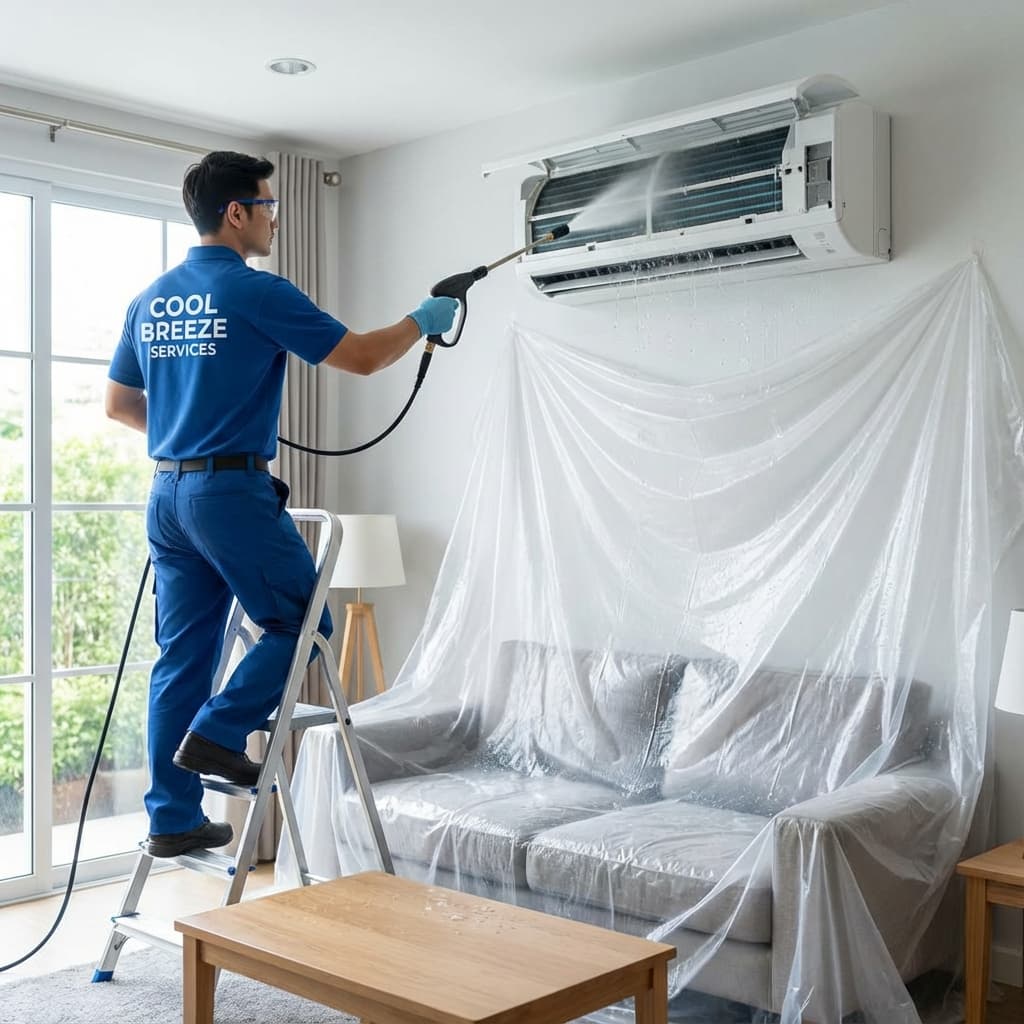
DIY fix: No coil spray (can damage fins and void warranty). Do NOT spray water directly on the coil without professional guidance.
Professional fix: Chemical foam cleaning of evaporator coil. Cost: QR 100–200.
Time to fix: 1–1.5 hours
Cause 3: Dirty Condenser Coil (Outdoor Unit)
How to identify: Unit runs but cooling is weak. Outdoor unit is hot to the touch beyond normal. Often happens after a sandstorm or prolonged period without outdoor unit maintenance.
DIY fix: You can carefully hose down the outdoor unit fins from the outside (not directly into the unit). Use low pressure water to flush sand/dust from the fins. Do this when the unit is powered off.
Professional fix: High-pressure jet clean of condenser coil. Cost: QR 80–150.
Cause 4: Compressor Not Starting (Capacitor Failure)
How to identify: Indoor fan runs normally. Outdoor unit makes a humming or clicking sound but doesn't start, or starts momentarily then trips off. This is a very common Qatar summer failure — heat stress kills capacitors.
DIY fix: None — capacitor replacement requires a technician.
Professional fix: Capacitor replacement. Cost: QR 80–200.
Time to fix: 30–45 minutes. This is one of the quickest and most affordable repairs.
Cause 5: Thermostat or Sensor Fault
How to identify: AC cycles on and off frequently. Unit turns off before room is properly cooled. Temperature display doesn't match actual room temperature. Remote control may display but commands not being executed properly.
DIY fix: Replace remote batteries. Check if indoor unit's temperature sensor wire has come loose (visible when you remove the front panel — a small clip-on sensor on the inlet grille).
Professional fix: Sensor replacement or thermostat repair. Cost: QR 100–300.
Cause 6: Undersized AC for the Room
How to identify: AC is working fine technically but the room simply never reaches the set temperature, especially during peak afternoon heat (2–5 PM) in Qatar summer. The unit runs 100% of the time and barely cools.
Calculation: In Qatar, you need approximately 600–700 BTU per square meter (accounting for extreme outdoor temperatures, sun exposure, and insulation quality). A 1.5-ton (18,000 BTU) AC is appropriate for roughly 25–30 sqm.
Fix: Add supplemental cooling (portable unit, ceiling fans to help distribute cool air) or upgrade to the next capacity size.
Cause 7: Ductwork Leaks (Central AC Only)
How to identify: Some rooms cool well, others remain warm. Overall cooling seems insufficient despite the system running. Higher electricity bills.
Professional fix: Duct inspection and sealing. Cost: QR 400–1,500 depending on accessibility and extent of leaks.
Cooling Performance by Temperature: What to Expect
| Outdoor Temp | Expected Room Temp (24°C setpoint) | Time to Cool 30sqm Room |
|---|---|---|
| 30–35°C | 22–24°C achievable | 10–15 minutes |
| 35–42°C | 23–25°C achievable | 15–25 minutes |
| 42–48°C | 24–27°C achievable with well-maintained unit | 25–40 minutes |
| 48°C+ | 25–28°C — some ACs hit high-pressure protection limit | 40–60 min or may not reach setpoint |
Frequently Asked Questions
My AC was serviced 2 months ago — why is it not cooling?
Qatar's extreme summer conditions can cause new issues within weeks of service. The most common new problems after a recent service are: (1) capacitor failure from heat stress, (2) refrigerant leak continuing after an incomplete repair, or (3) condenser coil clogged by a sandstorm since the service. Have the company that last serviced it return for a follow-up check.
My AC is cooling but the room smells bad — is that related?
Bad smells with adequate cooling usually indicate mold growth on the evaporator coil — a separate issue from cooling performance. The musty smell means the coil needs chemical cleaning (QR 100–200). In Qatar's humidity, this is very common during periods of reduced AC use (winter months when AC isn't running constantly).
The AC is very loud but cooling is fine — should I still worry?
Yes. New noises — rattling, grinding, clicking during operation — indicate mechanical wear. Ignoring them is risky; a failing fan bearing or loose component can cause further damage. Schedule a service visit within the week.
AC Not Cooling? We'll Diagnose It Today
ACQatars technicians carry diagnostic equipment and the most common repair parts on every service van. In most cases, we diagnose and fix the problem in a single visit. Available 24/7 across all Qatar areas. Call +974 3395 6298 or book online.